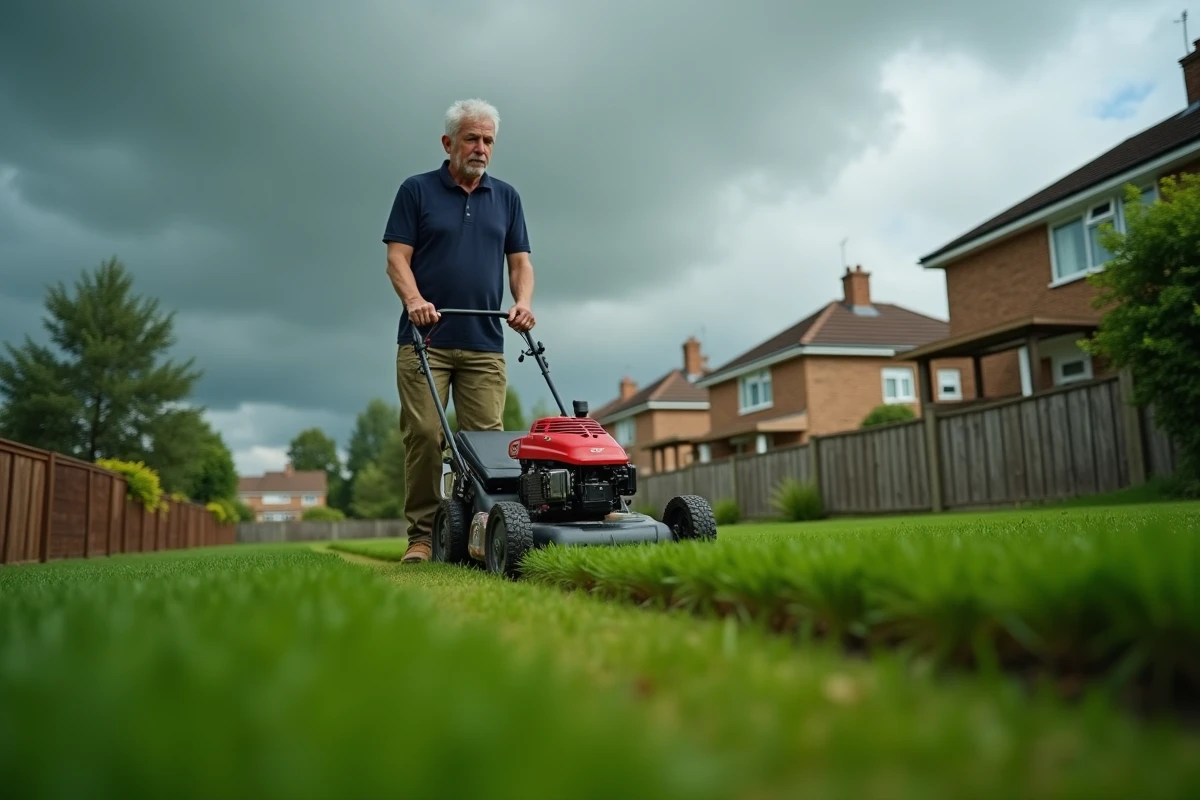
The lawn has grown several centimeters, the weather forecast predicts rain for tomorrow, and the question arises: should we take out the mower now or wait for it to dry? The choice of the right mowing window in relation to a rainy episode directly determines the quality of the cut and the health of the grass for several weeks.
Sloped lawn and flat terrain: two opposing mowing logics in the face of rain
On a sloped terrain, mowing before the rain limits runoff. Shorter grass reduces runoff during the downpour because the water clings less to the surface and penetrates more into the soil. On an unmowed slope, long blades channel water downwards, which accelerates erosion and dislodges the shallow roots.
On flat terrain, the logic reverses. Water tends to stagnate more, and mowing just before the rain leaves cut residues that form a compact layer once wet. This layer prevents soil aeration and promotes fungi. On flat ground, it is advisable to wait until the soil has absorbed the water and dried on the surface.
For those wondering whether to mow before or after the rain, the answer largely depends on the garden’s topography, not just the weather.
Mowing wet grass: the concrete damage to the cut and the mower

When mowing wet grass, the blades do not make a clean cut. They tear the blades rather than slice them cleanly. The result: frayed ends that turn brown within a few days and become entry points for fungal diseases.
Wet grass sticks to the blades and the deck, requiring frequent stops for cleaning. The clumped residues also clog the discharge channel, and the mower loses suction power. On an average-sized lawn, mowing time can easily double.
From a mechanical standpoint, moisture accelerates blade corrosion, especially on untreated steel models. And on waterlogged soil, the wheels create ruts that take weeks to recover.
- Uneven cut with tearing of blades, promoting lawn diseases
- Accumulation of clumped residues under the deck, reducing mower performance
- Soil compaction due to the weight of the machine on waterlogged terrain
- Visible ruts from repeated passes, especially with ride-on mowers
Ideal mowing window after rain: when the soil is ready
Everyone knows to wait for the grass to dry. The real question is how long. The most reliable test remains the foot test: you walk on the lawn and observe the footprint. If the imprint remains visible for more than a few seconds, the soil is still too soft to support the mower without compaction.
In practice, after moderate spring rain, you generally need to wait for the sun or wind to dry the surface. In overcast and windless weather, this delay can extend significantly. Feedback varies on this point depending on the soil type: clay soil retains water much longer than sandy soil.
For grasses, the optimal window is when the blades are dry but the soil retains some moisture below. The grass then cuts cleanly, and the roots still benefit from the absorbed water. Mowing in full dryness, on the other hand, unnecessarily stresses the lawn.
Mowing height to adjust after a rainy episode
After the rain, grass growth accelerates. There is a temptation to cut short to avoid having to mow too soon again. This is a common mistake. Raising the mowing height a notch after a wet episode protects the crown of the grasses and limits physiological shock.
If the grass has grown several centimeters during the rainy period, it is better to proceed with two passes spaced a few days apart rather than cutting it all at once. Never remove more than one-third of the total height in a single mowing.
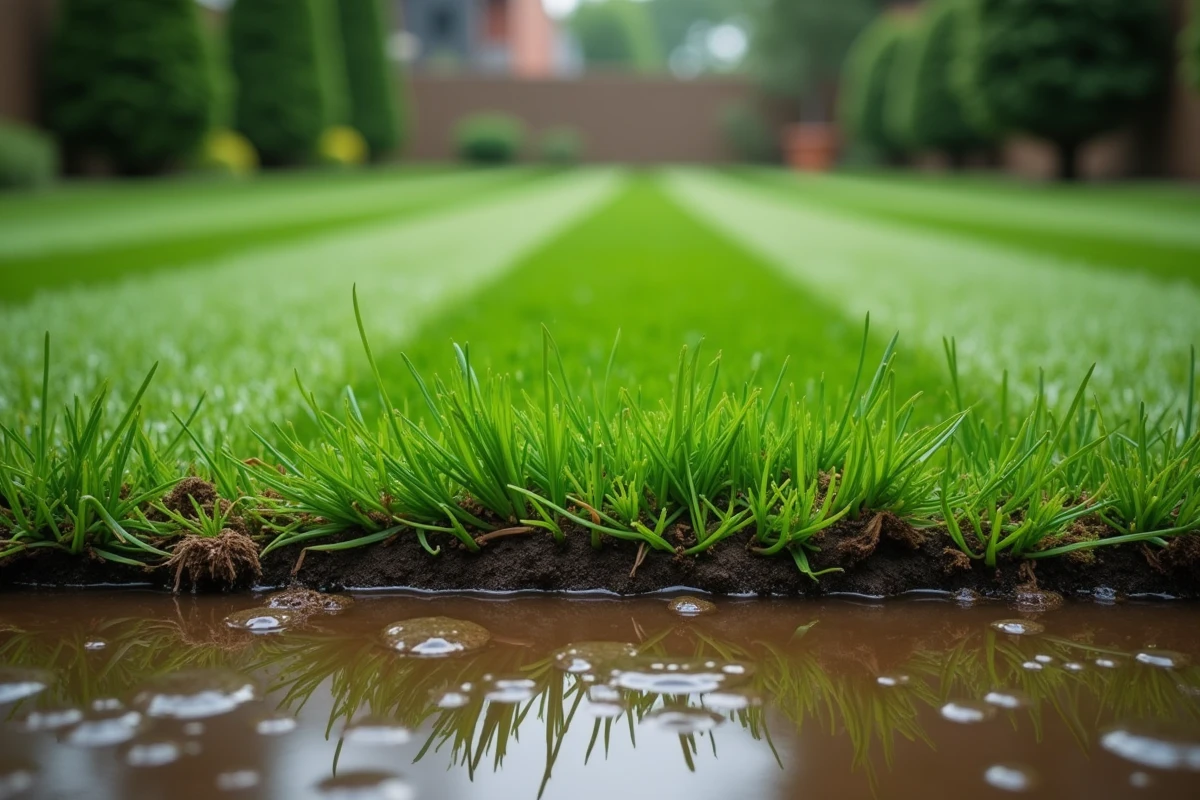
Connected mowers and weather forecasts: AI at the service of the right mowing window
Recent robotic mowers integrate soil moisture sensors and connect to local weather services to automatically adjust their mowing cycles. Specifically, the machine receives forecasts a few hours ahead and reschedules its mowing if rain is predicted.
Some models go further by cross-referencing data on temperature, ambient humidity, and estimated grass growth rate to calculate the optimal mowing window. The idea is not to replace the gardener’s common sense but to avoid unnecessary passes on waterlogged soil, which damages both the lawn and the machinery.
- Soil moisture sensors that trigger or postpone mowing based on the measured rate
- Connection to local weather APIs to anticipate short-term rainy episodes
- Growth algorithms that estimate grass height and schedule mowing frequency
This technology makes the question of “before or after the rain” somewhat obsolete for those who equip themselves. The machine makes the decision for them, often with more consistency than a fixed weekly mowing schedule.
Mower maintenance in the wet season: the important actions
Even when mowing at the right time, the rainy season puts more strain on the equipment. After each mowing, cleaning the underside of the deck with clear water prevents residues from fermenting and corroding the steel. A quick wipe on the blades, followed by air drying, is sufficient.
Sharpening the blades more frequently during wet periods ensures a clean cut even when the grass is slightly damp in the early morning. Dull blades exacerbate all the problems mentioned above: tearing, clogging, browning of tips.
The European directive 2025/2478 also pushes towards the gradual phasing out of non-compliant thermal mowers with new emission standards since January 2026. Electric models, now favored, are also more sensitive to moisture on the connections. Checking the waterproofing of the connections before each use in the rainy season prevents breakdowns and prolongs battery life.
The lawn thrives better when we adapt the mowing schedule to the reality of the terrain rather than a fixed routine. Slope or flat, clay or sandy soil, manual mower or connected robot: each configuration calls for a different balance. The foot test before taking out the machine provides a more reliable answer than any general rule.