After 60, skin tone, hair color, and the overall contrast of the face change. These changes affect how a color worn near the face brightens or dulls the gaze. Choosing clothing colors after 60 relies less on fixed rules and more on a concrete observation of what works with one’s current complexion.
Facial contrast and colors worn near the neck: the criterion that classic colorimetry overlooks
Most fashion guides reason in seasons (spring, summer, autumn, winter) to determine an ideal palette. This framework, popularized in the 1980s, classifies individuals according to the temperature and depth of their complexion. It remains useful as a starting point, but it does not take into account a parameter that evolves with age: the level of contrast between the skin, hair, and eyes.
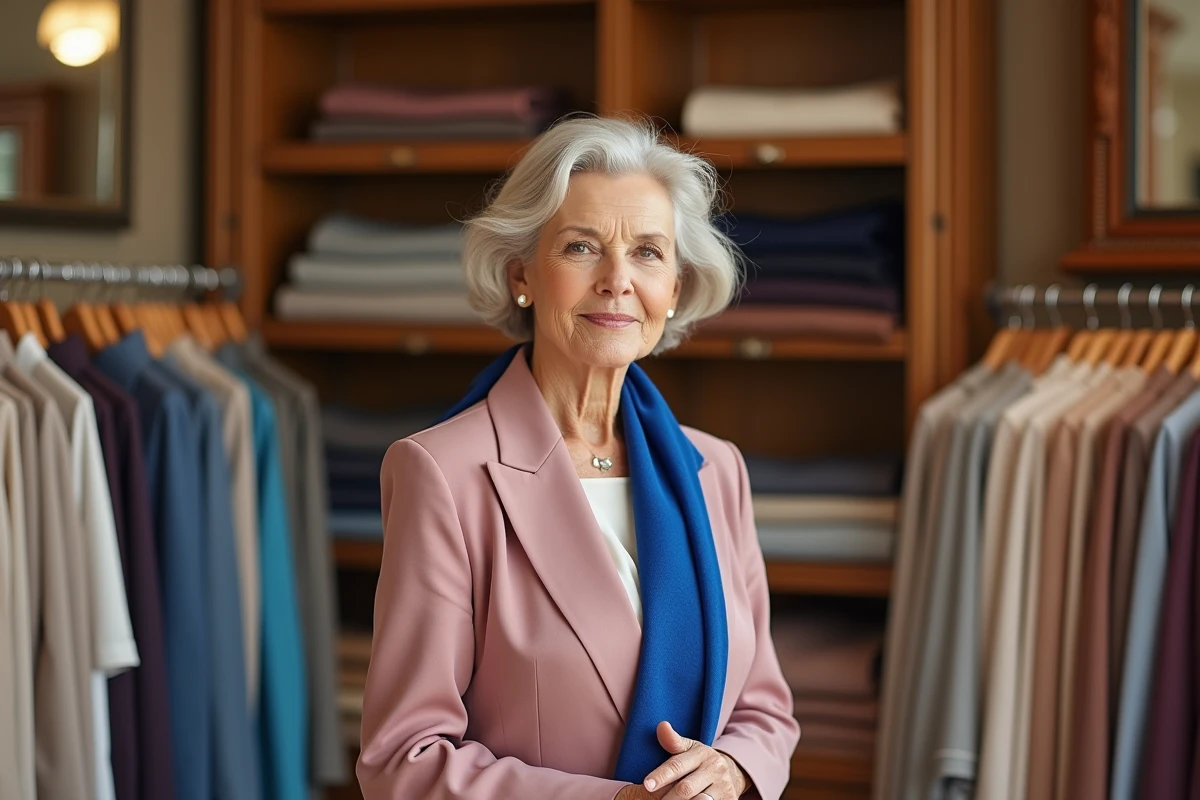
With white or silver-gray hair, facial contrast often decreases. A very saturated black turtleneck that worked at 40 with brown hair can harden features twenty years later. In contrast, a deep navy blue or a rich burgundy maintains density without creating too sharp a break with the face.
The most reliable approach is to test colors in natural light, in front of a mirror, placing the fabric directly under the chin. If the complexion appears more even and the gaze brighter, the color is suitable. If dark circles or redness become more pronounced, it’s time to move on to another tone.

Warm neutral palette after 60: building a coherent wardrobe base
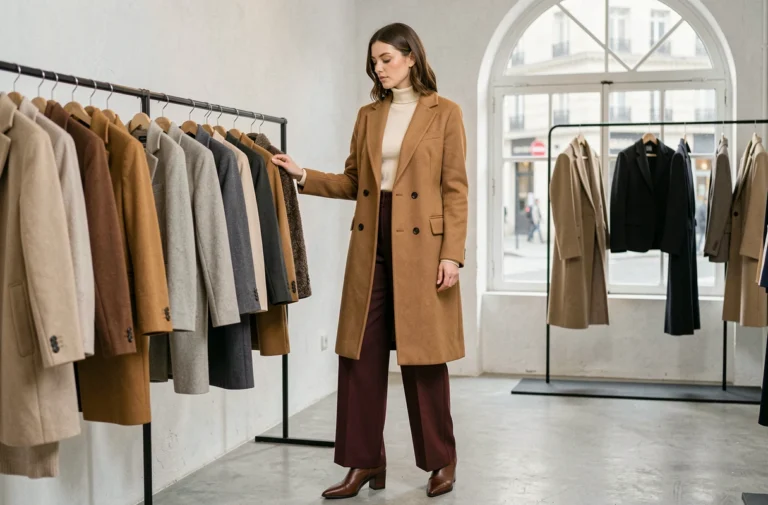
Recent fashion content, including those published in spring 2026, converges on one point: brown, camel, chocolate, olive, and navy blue tones form the most versatile base for an adult wardrobe. These warm neutrals advantageously replace all-black outfits, which are often too absorbing on skin that has lost its natural glow.
Black is not to be banned, however. Worn on the bottom (pants, skirt), it structures the silhouette without interfering with the face. Choosing clothing colors after 60 often means reserving the most flattering shades for the upper body, where they interact with the complexion.
Combining neutrals without monotony
A wardrobe entirely in beige quickly turns into a uniform. To avoid this pitfall, playing with textures does more than just multiply shades. A twisted knit camel sweater paired with chocolate wool pants creates visual relief, even without bright colors.
A few accent pieces are enough to energize the whole:
- A printed silk or modal scarf, worn tied near the neck, adds a touch of color exactly where the gaze first lands.
- A pair of gold or silver earrings (depending on the skin tone) adds brightness without extra outfit effort.
- A structured bag in a bold tone (brick red, fir green, plum) anchors the outfit and provides a focal point.
Bright colors after 60: which ones work and how to dose them
The idea that bright colors automatically rejuvenate is widely circulated. The reality is more nuanced. A very saturated fuchsia pink can brighten a golden complexion and dull a rosy one. The temperature of the color matters as much as its intensity.
For warm complexions (yellow or golden undertones), orange-reds, coral, dark olive, and mustard yellow tend to work well. For cool complexions (rosy or bluish undertones), raspberry pinks, royal blue, emerald green, and plum offer a better result.
The principle of the colored third
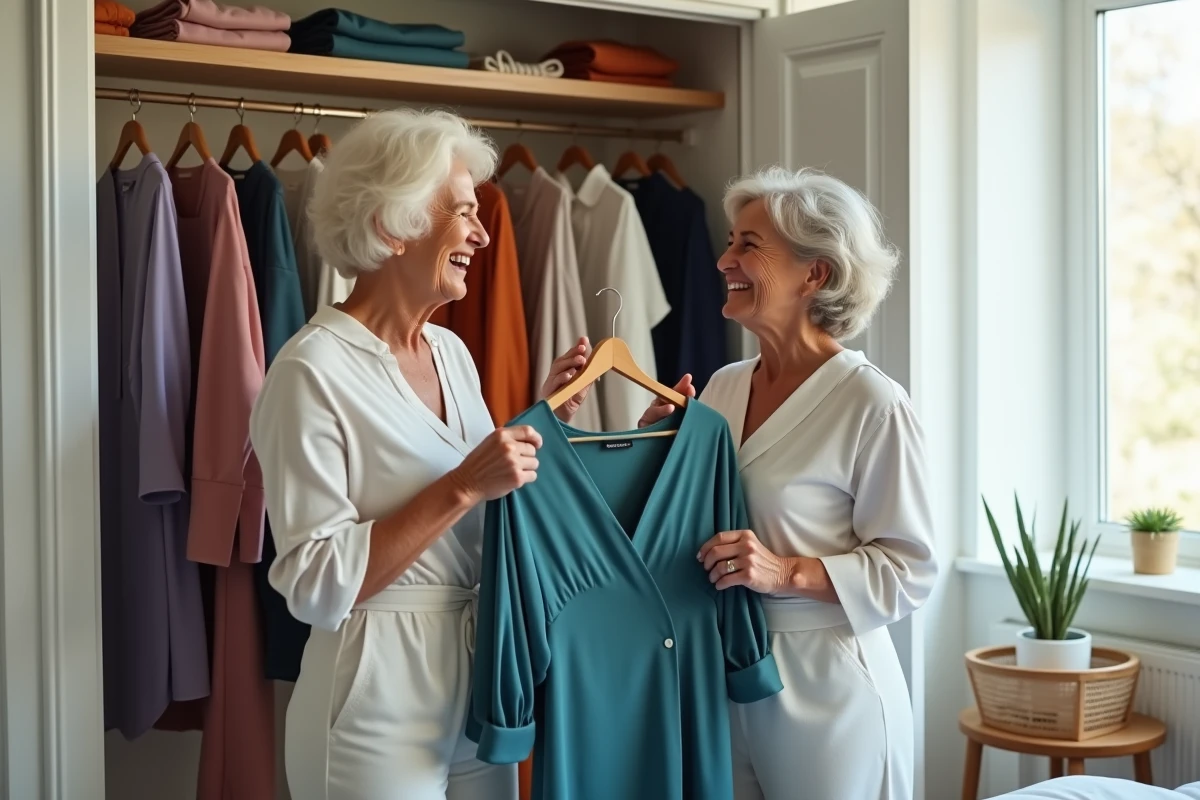
Wearing bright color from head to toe requires a stylistic confidence that not everyone seeks. A more gradual approach is to limit strong color to about one-third of the visible surface of the outfit. A brick red blouse with navy pants and nude shoes, for example, focuses attention on the upper body without visual overload.
This dosage also allows for reusing the same neutral basics with several colored pieces, making the wardrobe more functional without requiring a complete overhaul.
Adapting colors to gray or white hair: an asset rather than a constraint
Gray or white hair actually serves as a neutral background that accepts a wider palette than colored hair. Silver gray pairs particularly well with blues (from sky to navy), powder pinks, burgundy, and sage green.
Field feedback varies on this point: some women find that pure white worn near the face blends with their white hair and erases contrasts, while others feel that the overall look gains elegance. The difference often lies in the complexion. An off-white or ecru is better suited than optical white for most mature skin tones.
- Salt and pepper hair: medium contrasts work well (navy blue, burgundy, forest green).
- Completely white hair: moderately saturated colors (old rose, lavender blue, soft terracotta) create harmony without overwhelming the face.
- Dark gray hair: brighter colors work easily, as the natural contrast remains high.
Choosing clothing colors at this age benefits from being approached as a personal observation task rather than the application of a universal grid. Testing, comparing in natural light, noting what works: this empirical approach yields more reliable results than any theoretical system applied indiscriminately.