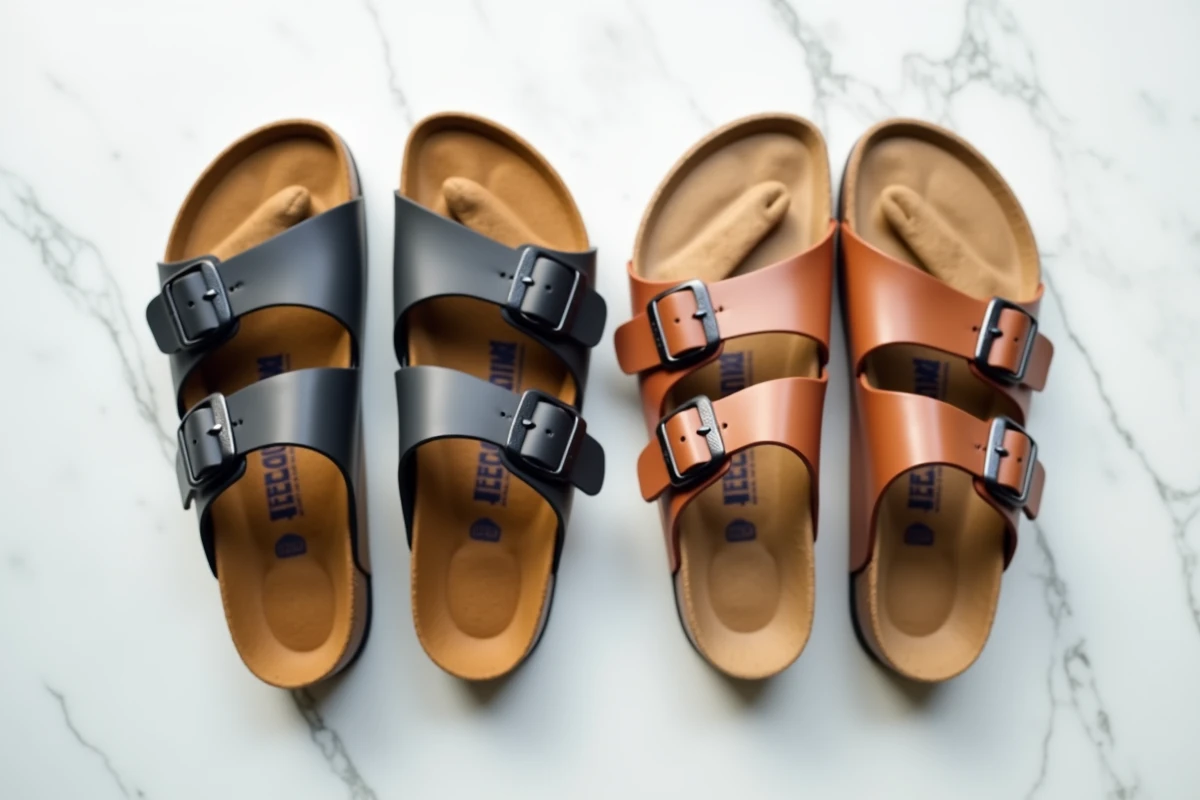
Scholl and Birkenstock both manufacture sandals with anatomical footbeds, but their technical approaches diverge on one fundamental point: the material of the footbed. Birkenstock uses a natural cork and latex footbed, molded to fit the wearer’s footprint over the weeks. Scholl favors synthetic gels and EVA foams, designed to provide immediate cushioning from the first wear.
This difference in design affects comfort, durability, and foot health in the long term.
Natural cork vs synthetic gel: what the material changes for the foot
Birkenstock’s cork is a porous material, naturally breathable. It absorbs moisture without retaining it, which limits maceration between the toes. In humid climates or with prolonged wear without socks, this property reduces the risk of developing skin mycoses.
The synthetic gels used by Scholl, made from EVA or polyurethane, offer soft cushioning from the first use. Their closed-cell structure makes them waterproof, which seems practical at first glance. A waterproof material retains sweat against the skin, creating a warm and humid environment conducive to dermatophyte fungi.
For daily wearers in high-humidity regions (coastal areas, tropical zones, continental summers), this technical detail is not trivial. An article detailing the differences between Scholl and Birkenstock shoes confirms that the choice of footbed material should be among the top purchasing criteria.

Footbed and arch support: Scholl and Birkenstock for flat feet
The arch support is the second major point of divergence. Birkenstock incorporates a pronounced arch in all its footbeds, calibrated to support the three arches of the foot (medial, lateral, transverse). This marked profile requires an adaptation period of a few days, which can be uncomfortable at first.
Scholl takes a softer approach. Its footbeds provide moderate support, less restrictive for a foot accustomed to flat shoes. Comfort is perceived as immediate, but structural support lags over time.
According to the 2025 annual report from the American Podiatric Medical Association (APMA), podiatrists recommend Birkenstock more for flat feet, due to the gradual adaptation of cork to individual morphology. This phenomenon of personalized molding does not exist with synthetic foams, which maintain a uniform shape until they wear out.
Points to check before buying for flat feet
- The height of the arch: Birkenstock offers a standard profile and a slightly softened “Soft Footbed” profile, while Scholl does not differentiate its support levels
- The rigidity of the outsole: a flat foot needs stability, not just softness. Birkenstock’s cork-latex soles provide a firmer base than Scholl’s EVA
- The break-in time: Birkenstock requires one to two weeks of gradual wear to reach optimal comfort, compared to immediate comfort with Scholl that declines faster over time
Regulatory classification and environmental commitment
Since January 2025, Birkenstock’s cork footbeds have been certified compliant with European directives on class I medical devices. This classification involves manufacturing controls and documented monitoring that Scholl products, classified as cosmetic, do not undergo.
The distinction is not merely administrative. A class I medical device ensures that the product has been evaluated for its biomechanical impact. A cosmetic product is not subject to any regulatory orthopedic verification, even if its marketing emphasizes foot comfort.
Carbon footprint and recycled materials
Birkenstock has integrated recycled materials into the majority of its footbeds since 2024, according to its CSR report published in February 2026. The brand shows a significant reduction in its carbon footprint across its entire production chain. Scholl, on the other hand, faces recurring criticism for its massive use of synthetic EVA, a petrochemical derivative that is difficult to recycle.
Price and durability: what is the real cost over two years of wear
Birkenstock positions itself in a higher price segment than Scholl for comparable models (strapped sandals, mules). The initial price gap may seem discouraging.
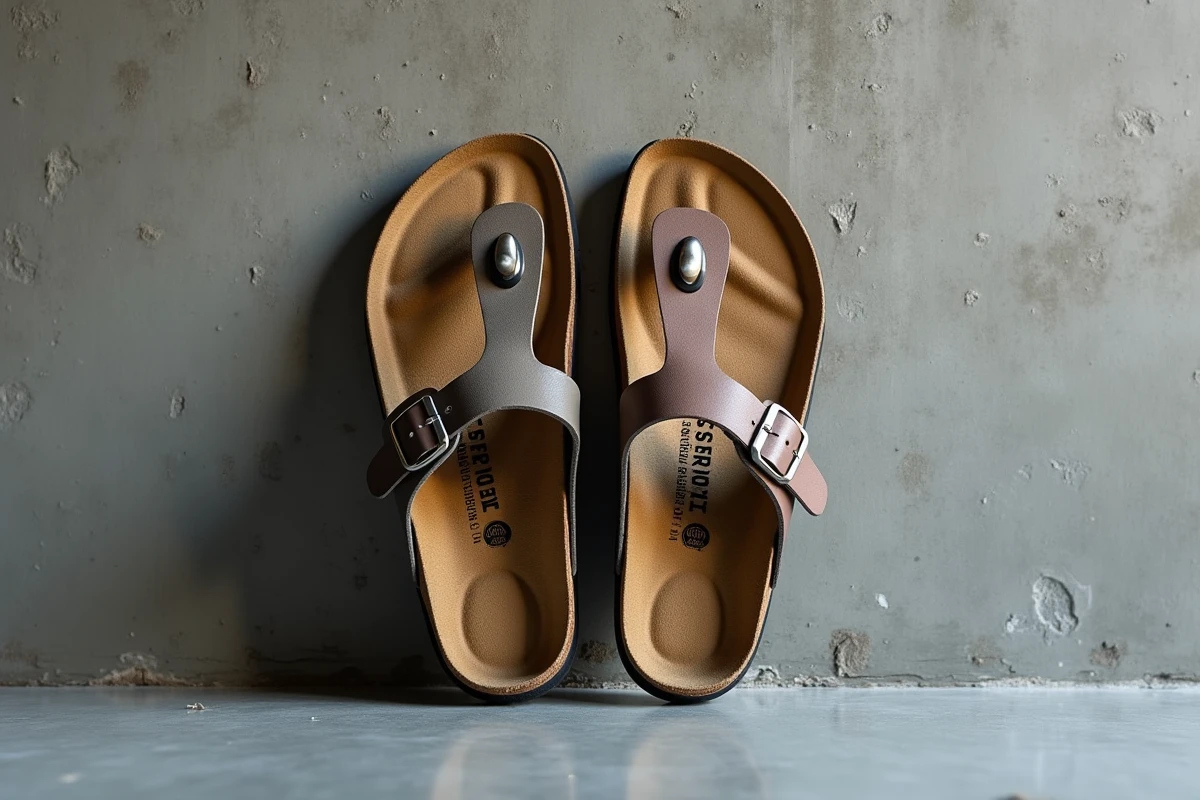
Durability changes the calculation. A pair of Birkenstock leather sandals with a cork sole typically lasts several seasons, and the footbed can be replaced by a cobbler without changing the entire shoe. Scholl sandals with EVA soles lose their cushioning more quickly, and their structure does not allow for partial replacement.
- Birkenstock: higher purchase price, long lifespan, possibility of resoling, active resale on the second-hand market
- Scholl: accessible entry price, immediate comfort, faster sole wear, complete replacement necessary
- Over a two-year cycle with regular wear, the cost per day tends to balance between the two brands, even favoring Birkenstock
The choice between these two brands depends less on immediate budget than on intended use. Occasional indoor wear may suffice with Scholl gel. Daily wear, especially outdoors or in warm climates, leans towards Birkenstock cork for both foot health and product longevity.