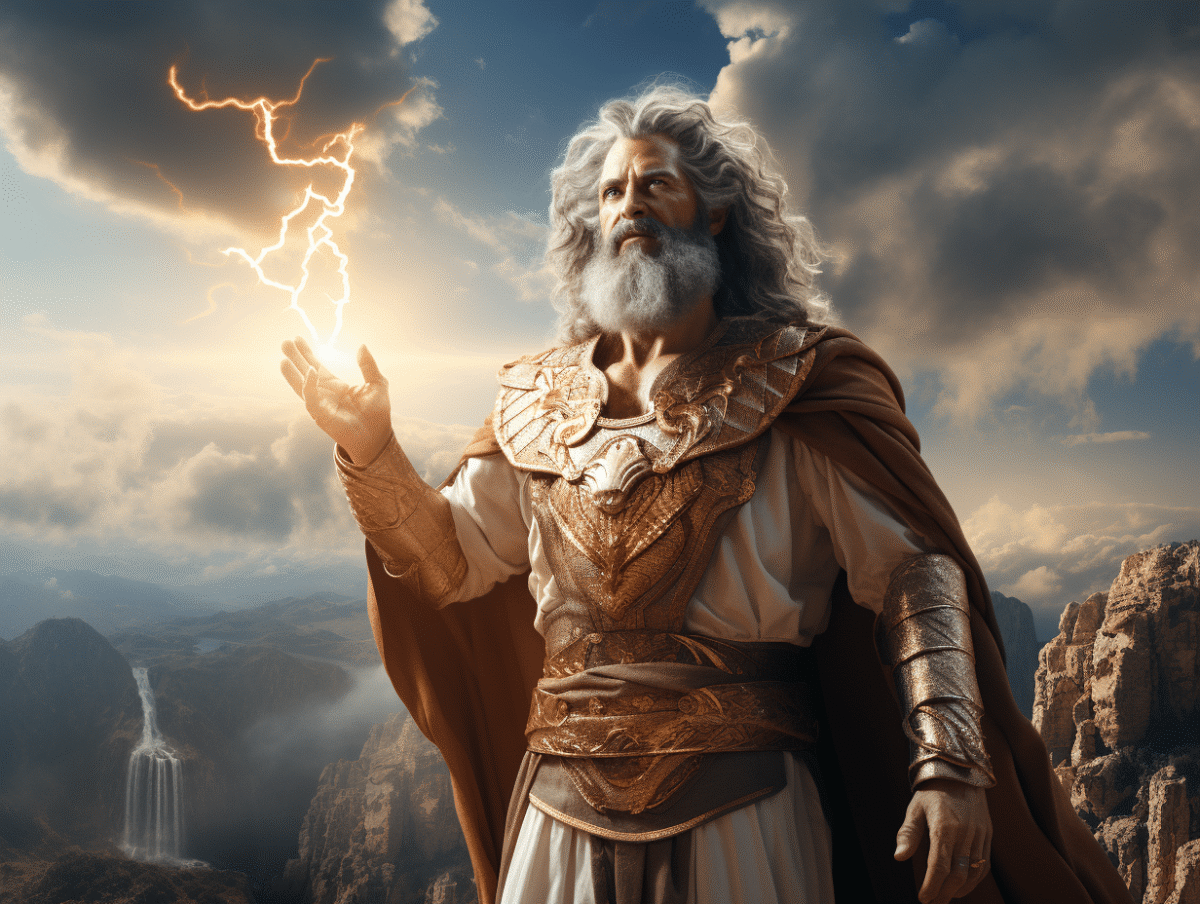
In the pantheon of Greek mythology, a hierarchy of deities reigns with powers that shape the world of men and gods. These entities are revered, feared, and worshipped for their attributes and their influence on the universe. Establishing a ranking of the most powerful gods is a complex exercise, as it involves examining the myths, legends, and epics that weave the fabric of their greatness. From Zeus, the ruler of Olympus, to Hades, lord of the underworld, each deity possesses a specific strength and sphere of control that makes them unique and formidable.
The Origins of Divine Power in Greek Mythology
Greek mythology is fertile ground for those interested in the roots of divine power. At the top of this hierarchy stands Zeus, son of Cronos, raised by the goat Amalthaea and the Curetes, far from his child-devouring father. Having become King of Olympus, he wields the thunderbolt and reigns over the sky. His victory over the Titans symbolizes the rise of the Olympian order over primordial chaos. The ancient Greek gods and their fascinating legends establish Zeus as the supreme embodiment of divine sovereignty.
In the dark contrast of Olympus stands Hades, God of the Underworld, brother of Zeus and Poseidon. His underground realm, populated by shadows and guarded by the fearsome dog Cerberus, is also a domain of power. Hades, often overshadowed by the brilliant authority of Zeus, remains one of the pillars of the cosmic order. His mastery over death and his union with Persephone grant Hades an influence that extends far beyond the gates of Hades.
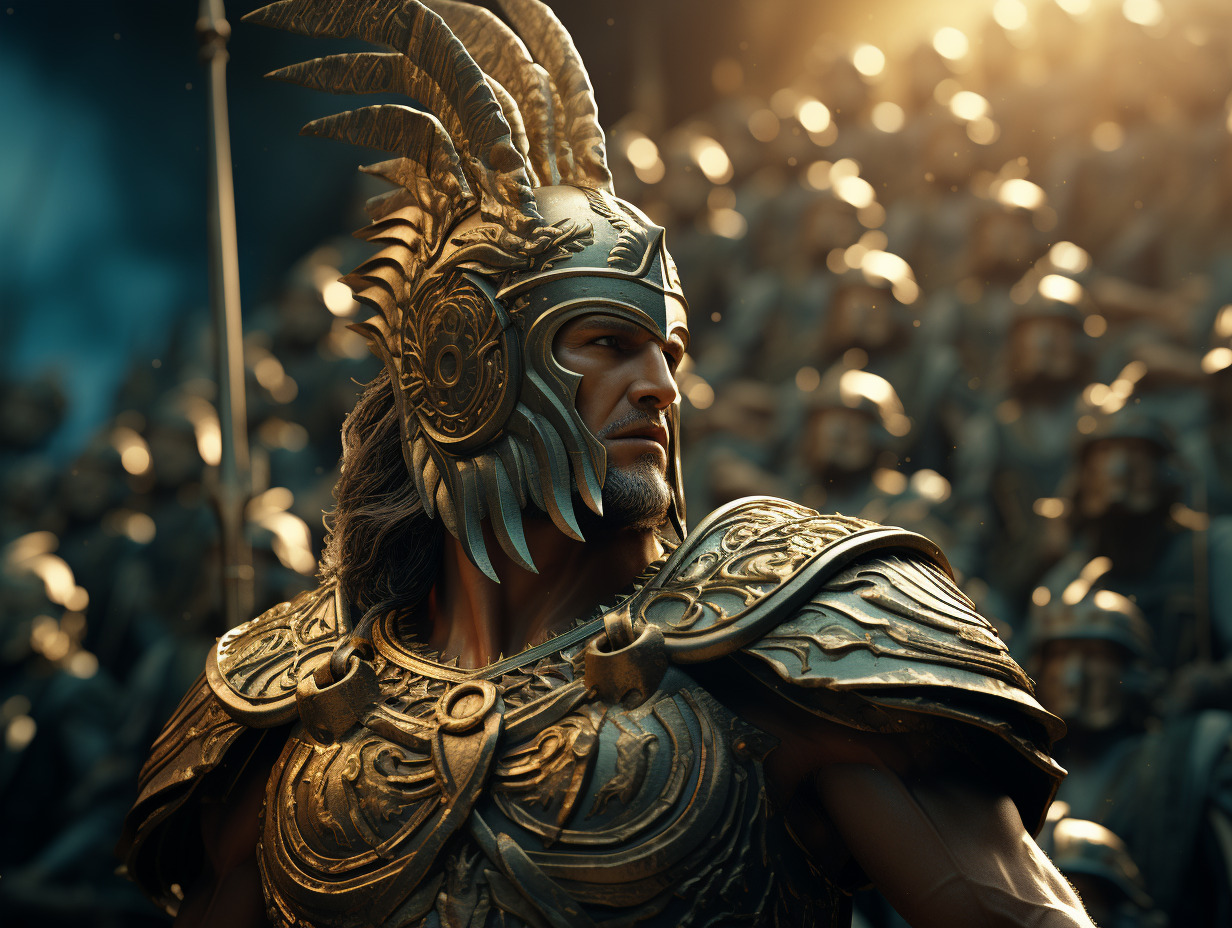
Athena, Goddess of War and Wisdom, is born fully armed from the skull of Zeus, a precursor sign of her exceptional destiny. Her attributes, helmet, shield, and spear, place her at the heart of conflicts, where her mastery of military strategy proves decisive. Daughter of Metis, Athena embodies an intelligent and thoughtful strength. She does not hesitate to support heroes such as Jason, Hercules, or Perseus, confirming her role as a protector and advisor among mortals and immortals.
The Greek Pantheon: Hierarchy and Influence of the Major Deities
At the heart of the Greek pantheon, the hierarchy of deities depicts a complex and structured order, where each god and goddess has a precise sphere of influence. Zeus, the King of Olympus, sits at the center of this hierarchy. With his attributes of the thunderbolt, the eagle, and the oak, he embodies celestial sovereignty and exercises his authority over the Olympian gods and mortals. His power is not limited to the mere possession of the thunderbolt; it also resides in his ability to unite and lead all the divine forces of Mount Olympus.
Under Zeus’s reign, Hades presides over the underworld with his own authority. Although he stands apart from Olympus, the God of the Underworld influences the life and death of every soul. His realm is populated by the shadows of the deceased and guarded by the terrifying dog Cerberus. The bident, a symbol of his dominion, allows him to rule this domain with an iron fist, thus complementing the governance of Olympus with control over the invisible.
The power of Athena, the Goddess of War and Wisdom, is symbolized by her complete armament: helmet, shield, and spear. Her very birth, springing from the skull of Zeus, marks her strategic importance within Olympus. Her wisdom and expertise in military strategy have been decisive assets for Greek heroes such as Jason, Hercules, and Perseus. Athena thus asserts herself as an influential deity, capable of tipping the outcome of conflicts and guiding mortals toward glory or wisdom.