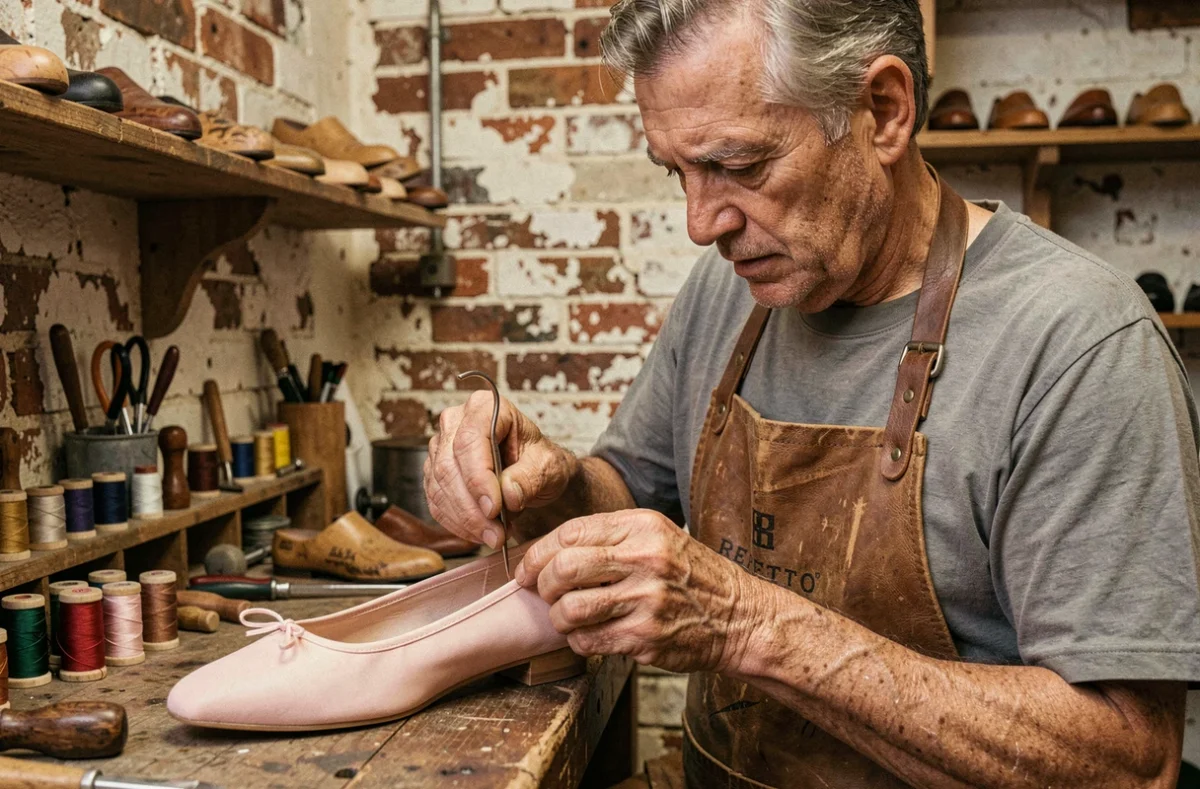
The Repetto ballet flats are made using the turned stitching technique, a construction method where the leather upper is attached to the sole on the inside and then turned out. This process gives the model its characteristic flexibility, but it also imposes specific constraints during repairs. Any intervention on the sole, stitching, or heel requires knowledge of this construction to avoid distorting the shoe.
Turned stitching and repair: what this construction means for the cobbler
In a classic construction (Blake or Goodyear), the sole is attached with visible stitching or accessible from the outside. The turned stitching works differently: the stitching is located inside, hidden after the shoe is turned out.
For a cobbler, this means that a complete resoling requires careful disassembly of the original assembly. A professional who has never worked with this type of construction risks putting too much pressure on the fine leather upper, causing irreversible tears.
It is therefore advisable to have your Repetto ballet flats repaired by a cobbler who is skilled in working with soft constructions and the lamb or goat leathers used by the brand. A workshop accustomed to standard dress shoes may not have this expertise.
Before sending or dropping off the pair, a remote diagnosis facilitates the assessment. Photographs of the outer sole, the inside at the heel, and damaged areas allow the artisan to provide a tailored quote. Reporting water infiltration or a previous repair attempt helps avoid unpleasant surprises.
Common repairs on Repetto ballet flats: sole, pads, heel
Three interventions frequently arise with this type of ballet flats.
Installation of protective pads
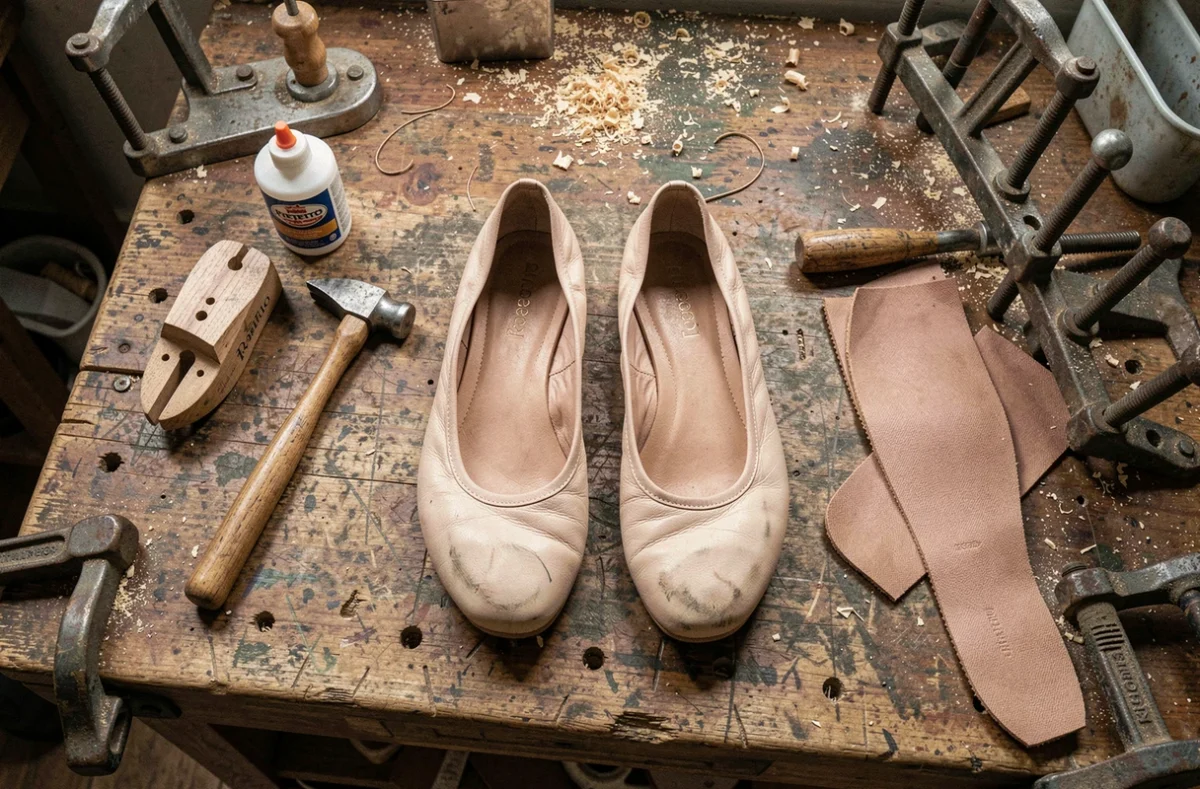
The leather sole of Repetto flats wears out quickly on urban surfaces. The installation of rubber pads (often Vibram type) is the most common service. Some cobblers offer recessed pads, which are more discreet and preserve the aesthetic of the sole.
Having pads installed right at the time of purchase is often recommended. On such a fine leather sole, just a few weeks of wear on asphalt can significantly damage the material.
Leather resoling
When wear exceeds the pad stage, a complete leather resoling is necessary. The cobbler removes what remains of the original sole, prepares the surface, and glues and stitches a new sole compatible with the turned stitching construction. This intervention restores the shoe’s original structure.
Replacement of the toe cap and heel repair
The heel of Repetto ballet flats is low, but the toe cap (the wear piece under the heel) deteriorates over time. Its replacement is quick and inexpensive. However, if the heel itself is deformed, partial reconstruction may be necessary.
Strong glue and DIY repairs: mistakes that complicate the cobbler’s work
Applying strong glue yourself can compromise professional repair. Residues of cyanoacrylate or neoprene glue prevent clean surface preparation. The cobbler then has to spend time sanding or stripping without any guarantee of achieving proper adhesion.
Similarly, using inappropriate polish applied in thick layers on lamb leather can clog the pores and make the leather brittle. For regular maintenance, cleaning with a slightly damp soft cloth is sufficient. Specific products for smooth leather (nourishing cream, waterproofing) should be used in thin layers.
Some precautions for storage can also extend the life of the ballet flats:
- Avoid prolonged exposure to direct heat (radiators, dashboards), which dries out the leather and weakens the stitching
- Store away from light to preserve the color, especially on patent or colored leather models
- Limit contact with moisture: suede absorbs water quickly, which distorts the insole
Repair Bonus and choosing a certified cobbler
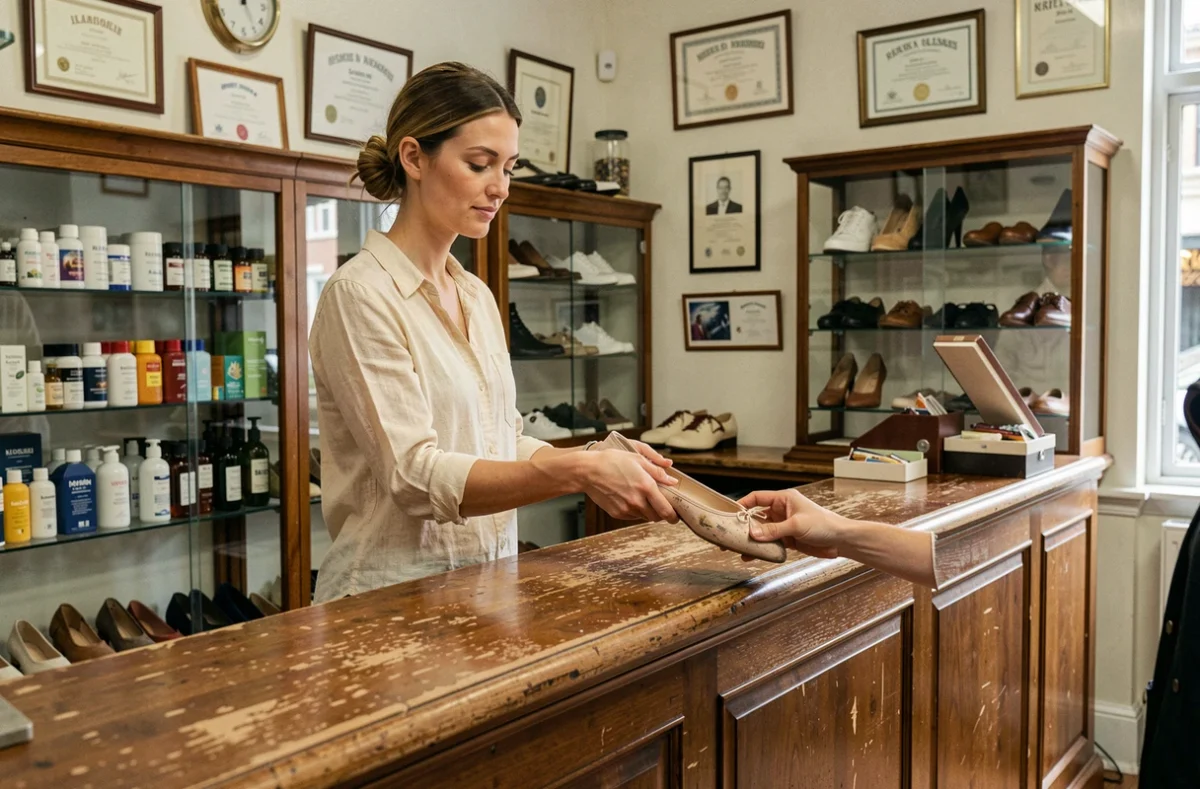
Since 2023, the Repair Bonus allows for a direct reduction on the bill for shoe repairs performed by a certified professional. The discount is deducted at the time of payment, without any paperwork to fill out. This scheme does not cover maintenance services (cleaning, polishing, waterproofing), only actual repairs such as resoling or heel replacement.
The cobbler’s certification is crucial. An uncertified artisan cannot apply the bonus, even if they have the technical skills to work on high-end shoes. It is essential to check their certification before requesting a quote, not after the repair.
Beyond the bonus, a few criteria help in choosing the right professional:
- Documented experience with turned stitching or soft leather shoes (portfolio, customer reviews)
- Possibility of remote diagnosis via photo before sending the pair
- Use of materials compatible with the original construction (leather soles, Vibram pads, glues suitable for fine leather)
Repairing Repetto ballet flats remains technically accessible for a cobbler trained in soft constructions. The real risk is not the complexity of the intervention, but choosing a professional who does not understand the specifics of turned stitching. Checking the certification, sending photos in advance, and avoiding any DIY gluing attempts before drop-off: these three precautions are enough to preserve the pair.