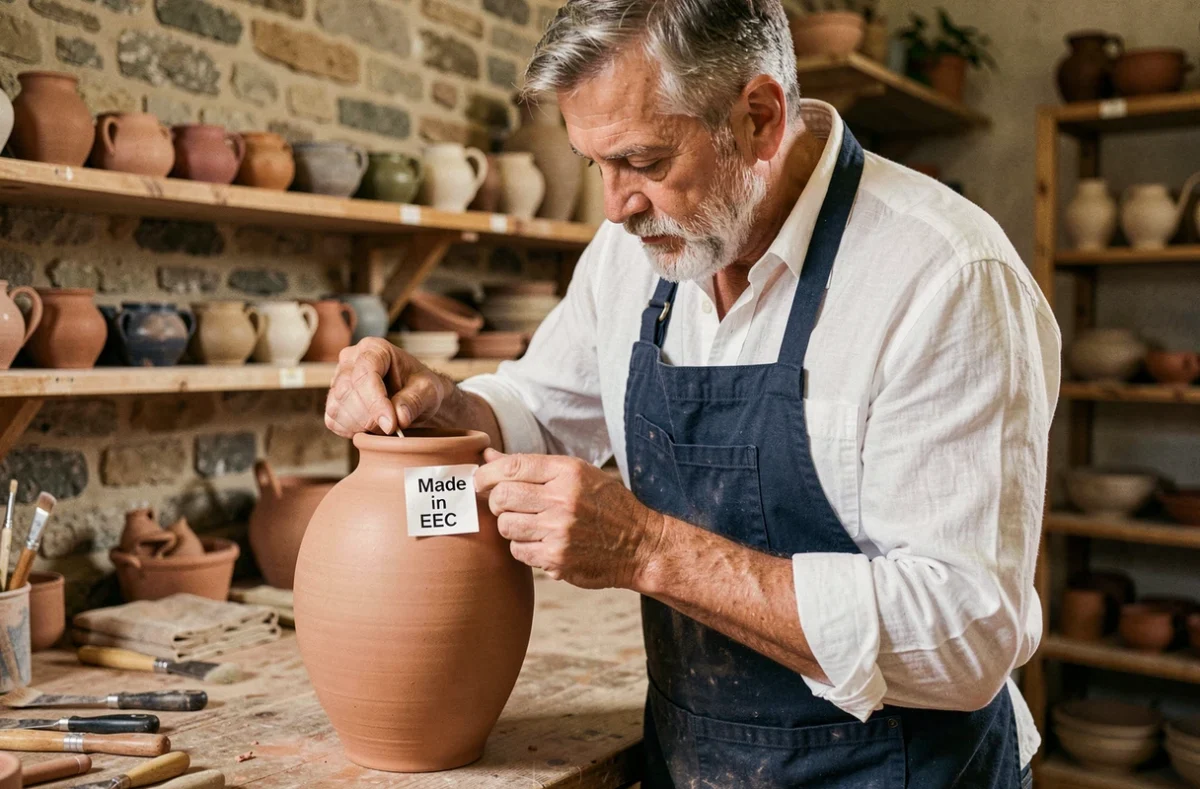
The “Made in EEC” (European Economic Community) label indicates that a product was manufactured within the European Economic Area. Although it has since been replaced in official texts by “Made in EU,” some brands still use the term. It serves a specific purpose: to tell consumers that the product meets European manufacturing standards. For businesses, this label is a commercial, regulatory and strategic tool whose implications deserve closer examination.
Customs origin and labelling: two distinct concepts
One fundamental point is still misunderstood by many manufacturers. A product’s customs origin and the claim displayed on its label are not the same thing in legal terms.
As a general rule, customs origin is determined by the country where the last substantial transformation took place, provided it was economically justified and resulted in a new product or represented an important stage in its manufacture. A component assembled in France from parts made in Asia may therefore qualify as French in customs terms if the assembly constitutes a sufficient transformation.
A voluntary claim such as “Made in EEC” or “Made in EU” must be assessed according to a different criterion: the risk of misleading consumers about the product’s actual geographical or commercial origin. The label alone does not change its customs origin.
Displaying “Made in Europe” on a product whose added value comes almost entirely from a non-EU country may expose a business to challenges, including from customs authorities during checks on products being placed on the market.
Understanding the benefits of Made in EEC first requires understanding this distinction, since an unjustified label can negate all the expected benefits.
Regulatory compliance for Made in Europe labelling
No general EU provision requires products sold in the EU to carry an origin label. Exceptions apply to certain agricultural, food and cosmetic products, but for most manufactured goods, origin labelling is voluntary.
This freedom does not mean there are no rules. Once a label is applied, it must comply with the non-preferential rules of origin set out in the Union Customs Code. In France, customs authorities help businesses determine the origin of their products and protect origin labelling against misuse.
Penalties for misleading labelling
On import, a product bearing an inaccurate origin claim may be held by customs. Once it is on the market, consumer protection authorities may take action under consumer law. The risk goes beyond a fine: a disputed label undermines a company’s commercial credibility with its distributors and end customers.
Made in EEC labelling: tangible benefits for businesses
When a label is backed by verifiable origin, its benefits are tangible. They fall into three main areas.
- A quality signal for European consumers, who associate local manufacturing with stricter safety, traceability and environmental standards than those of many non-EU countries
- A point of differentiation in markets where price competition is still dominated by imported products, particularly in the textile, footwear, jewellery and glassware sectors
- Alignment with growing demands for transparency under the EU directive on environmental claims, which sets stricter rules for claims relating to product sustainability and origin
Countries such as China, the United States and Brazil already require imported products to carry an origin label. Members of the European Parliament have repeatedly highlighted this imbalance: European manufacturers exporting to these markets must comply with their rules, while products entering the EU are not subject to the same requirement.
Textiles and proposed reforms
The textile sector illustrates the issues at stake. In 2023, the European Commission said it would consider adding origin to the areas that could be covered by a review of textile labelling rules. The reform has not yet resulted in a general requirement, but it points in a clear direction. Clothing brands that get ahead by putting traceability systems and origin labelling in place now gain a measurable regulatory advantage.

Globalised production chains: the challenge of credibility
The European debate over “Made in EU” has shifted to a more complex issue: production chains spanning several countries. A product designed in Germany, with components made in Poland and final assembly in Portugal, may legitimately claim European origin. Tensions arise when key stages—such as raw material sourcing or the manufacture of technical subassemblies—take place in non-EU countries.
For businesses, the question is no longer simply “Am I allowed to use this label?” but “Would my label stand up to close scrutiny by an informed consumer or a competitor?” The directive on environmental claims reinforces this requirement: any claim relating to origin must be supported by documentary evidence.
- Map every stage of the value chain to identify where the substantial transformation takes place
- Document the flow of materials and components to respond to a customs inspection or a competitor’s complaint
- Tailor the wording on the label to reflect the actual extent of European manufacturing (“Assembled in France,” “Designed and manufactured in the EU,” “Components of European origin”)
Detailed labelling that specifies the nature of the European contribution, rather than relying on a generic claim, better protects the business and gives consumers clearer information.
“Made in EEC” or “Made in EU” labelling remains a powerful way to add value, provided it is supported by the reality of the manufacturing process. Businesses that invest in production traceability and documentary compliance for their labelling can turn a simple claim into a lasting competitive advantage in the European market.