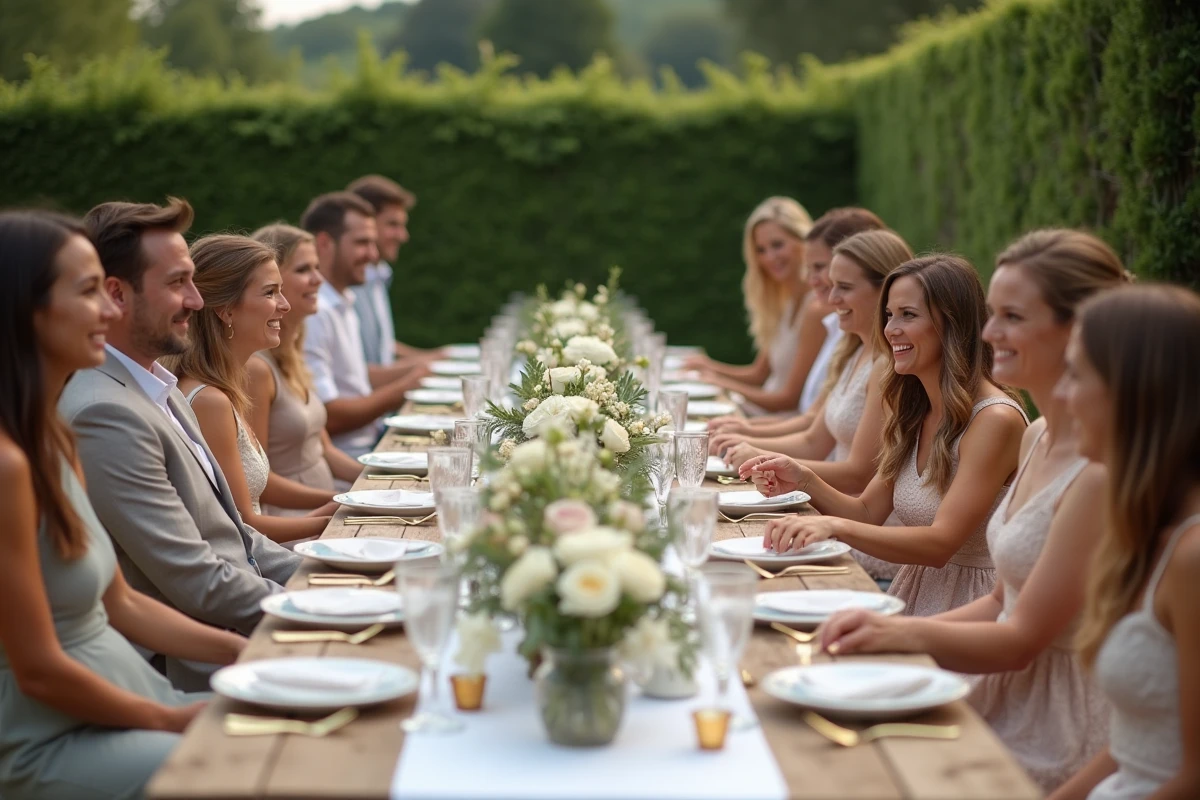
Organizing a dinner for forty people is not just a simple multiplication of plates and cutlery. Once a certain number of guests is reached, group dynamics come into play and influence the fluidity of exchanges.
Some layouts encourage cross-conversations, while others create intimate islands. Space constraints, family relationships, or the desire to surprise sometimes impose unexpected and effective choices. The arrangement of tables is no longer just a matter of seating but becomes a strategic lever to ensure a harmonious experience for each guest.
Choosing the right table arrangement: what to know for a wedding with 40 guests
When it comes to gathering forty loved ones around the same meal, the wedding table plan becomes a balancing act. The goal: to foster conviviality, ensure everyone finds their place, and keep movement fluid. To achieve this, several criteria come into play: the configuration of the reception hall, the shapes of the chosen tables, visibility of the head table, and ease of access for servers. It is impossible to leave these parameters to chance.
Round tables are often favored to encourage discussion, while rectangular tables, aligned like a banquet, create a more formal and structured atmosphere. Designing a room plan, either on paper or through specialized software, allows for visualizing circulation, anticipating groupings, and balancing proximity between families or groups of friends.
Mixing the shapes of wedding tables creates different atmospheres, tailored to the space and style of the venue. Placing the head table in the center or at the end of the room draws attention to the newlyweds while maintaining a balance between intimacy and openness to the guests. One must also consider the dance area, space for the buffet, floral decoration, without ever compromising the comfort of the guests.
To go further and visualize concrete examples, the page wedding table arrangement ideas for 40 guests is full of practical advice and inspirations to make this room plan both functional and warm.
What table configurations create the best atmosphere? 10 inspiring ideas to discover
The choice of wedding table arrangement significantly impacts the ambiance of the reception. A well-thought-out layout changes everything, paving the way for exchanges and simplifying movement in the room. To help you envision this, here’s an overview of ten options that have often been tested and widely approved at weddings with forty guests.
- Opt for round tables: they encourage equal exchanges, ideal for families and friends to discover and share without shyness.
- Choose a U-shaped arrangement: the view of the head table is unobstructed, and the central space can be used for a buffet or dance floor.
- Set up a straight banquet: a long table, perfect for a festive spirit and a true sense of unity.
- Alternate between round and rectangular tables: this solution adapts to the room configuration while varying the atmospheres around the tables.
- Consider a T-shaped table: it highlights the newlyweds while bringing close guests together, fostering natural interactions between different rows.
- Create clusters of small tables: each group enjoys a bubble of conviviality while remaining connected to the whole.
- The chevron configuration: it energizes the space, improves circulation, and makes service smoother.
- Imagine an open circle wedding table plan: all guests stay close while maintaining an overview of the room.
- Vary the wedding tables according to affinities and generations, allowing for unexpected encounters and renewing exchanges at each service.
- Reserve a room plan with a lounge area: a perfect relaxation corner to extend discussions after the meal.
Ultimately, each configuration serves a simple purpose: to allow conviviality to settle in without imposing overly strict codes. The diversity of table plan ideas offers the freedom to create a decor that reflects your story, balancing originality and personalization.
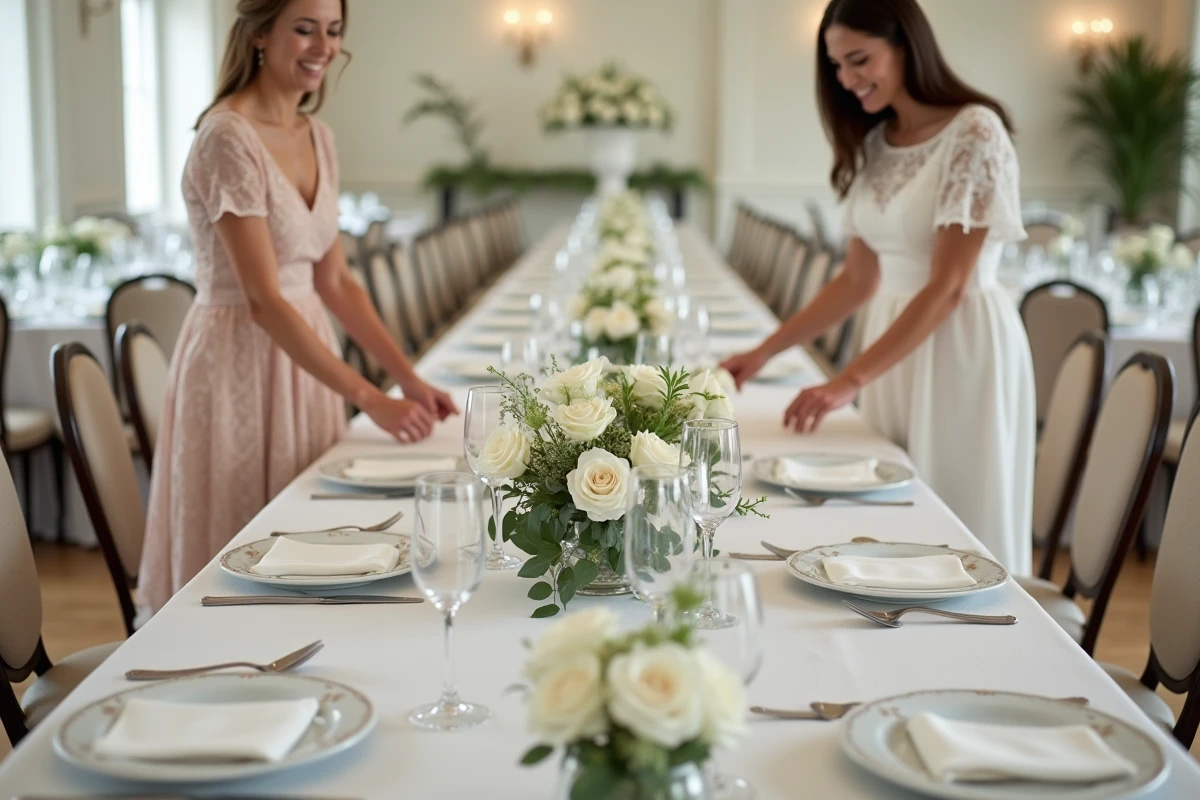
Tips to personalize your table plan and facilitate conviviality on the big day
An original table plan is built through thoughtful touches. It takes into account the relationships between guests, their affinities, and the particularities of each family. To give character to your reception, draw inspiration from the decoration chosen for the wedding: the table plan content can match the colors or theme of the day. The table names then become a nod: places that have mattered to the newlyweds, literary references, or shared vacation memories. Everyone finds their piece of history, and the head table captures attention without overshadowing the other details designed for the guests.
Here are some concrete ideas to enhance conviviality and personalization:
- Invest in personalized place cards, with a handwritten message or a symbol that recalls a shared memory.
- Place the table plan at the entrance of the room, so everyone can easily orient themselves and arrive without stress.
- Encourage different generations to sit together at the same table: a way to weave connections and spark unexpected conversations.
Preparing the table plan for a wedding is not a fixed science. It’s adjusted and refined until the last minute. For forty guests, there is plenty of room for maneuver: it’s an opportunity to sow original ideas, message cards, evolving centerpieces, and memorable details. These little attentions will leave a lasting impression once everyone is seated around the wedding table, transforming the meal into a living memory.