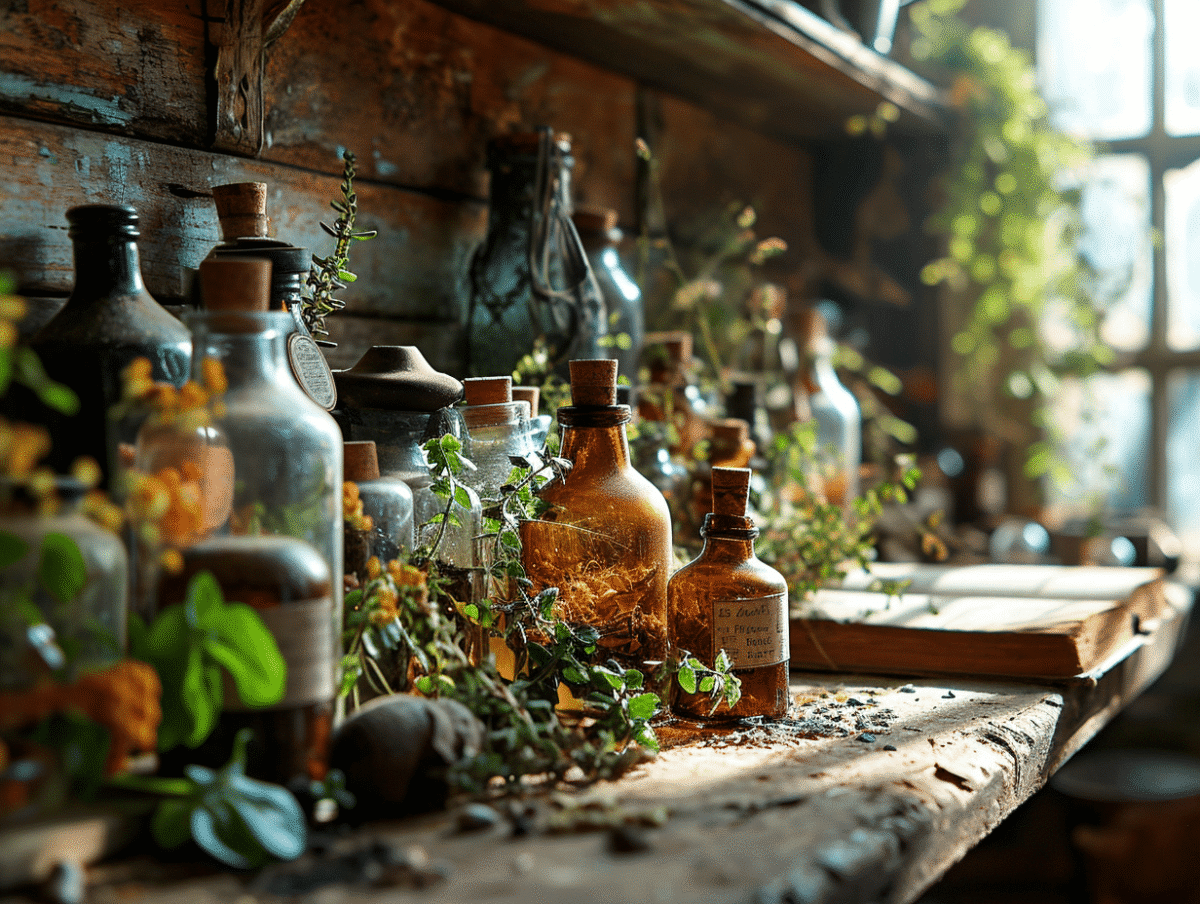
In the vast field of remedies and care, medicinal plants represent a bridge between ancestral practices and the advances of modern science. For millennia, civilizations around the world have turned to flora to heal their ailments. Today, as conventional medicine dominates, a resurgence of interest in the benefits of plants is emerging. Researchers are gradually validating the therapeutic virtues of certain species through rigorous studies, while awareness of more natural and sustainable lifestyles promotes a return to the roots of phytotherapy.
Medicinal Plants Through the Ages: From Ancestral Tradition to Scientific Recognition
Phytotherapy has its roots in a history as ancient as that of Man himself. Medicinal plants, considered the first therapeutic tool, have accompanied human societies since the dawn of civilization. From the texts of Dioscorides, a reference author on traditional remedies, to the manuscripts of Hildegarde von Bingen, this knowledge has been passed down and enriched over time.
In the 18th century, the use of medicinal plants was common and integrated into traditional medicine practices. These plants, both food and healing, were an integral part of culture and daily life. The distinction between edible and medicinal plants was not as marked as it is today, reflecting a holistic view of health.
With the advent of modern scientific recognition, the perspective on phytotherapy has evolved. Studies are multiplying, and specialized journals such as ‘Else Revue’ are dedicated to analyzing the active principles contained in medicinal aromatic plants. This research not only validates the therapeutic properties of tradition but also opens new perspectives in care.
The transmission of this ancestral knowledge continues, while adapting to the demands for proof and efficacy characteristic of our time. The traditional medicinal plant finds its place in a contemporary context where science and respect for ancient knowledge meet to offer complementary care alternatives to conventional medicine.

Modern Phytotherapy: Challenges, Research, and Integration into Contemporary Medicine
Modern phytotherapy is part of the continuity of a millennia-old heritage while addressing the challenges posed by contemporary scientific rigor. The isolation of active principles from plants such as morphine, codeine, quinine, salicylic acid, and digitalis in the 19th century marked a decisive step, transforming the ancestral practice into a precise pharmacological use.
The 20th century, with the advent of omic technologies, opened new avenues for exploring the virtues of plants. These technologies, by generating massive biological data, allow for a finer understanding of the complex interactions between plant compounds and human physiology. Research is refining, clinical studies are multiplying, and research in phytotherapy is becoming a leading scientific field.
The integration of phytotherapy into contemporary medicine is not limited to the recognition of its active principles. It also involves valuing professions related to medicinal plants, such as the certification of herbalists, and reflecting on the preservation of the intangible cultural heritage represented by the knowledge related to the use of plants.
Practices are modernizing and fitting into a demanding regulatory framework. Dietary supplements based on medicinal plants and essential oils are experiencing notable growth, attesting to the increasing public interest in natural alternatives. Specialist Ida Bost emphasizes that these practices do not replace conventional medicine but integrate as complements, reflecting an evolution in the perception and use of plants in healthcare.