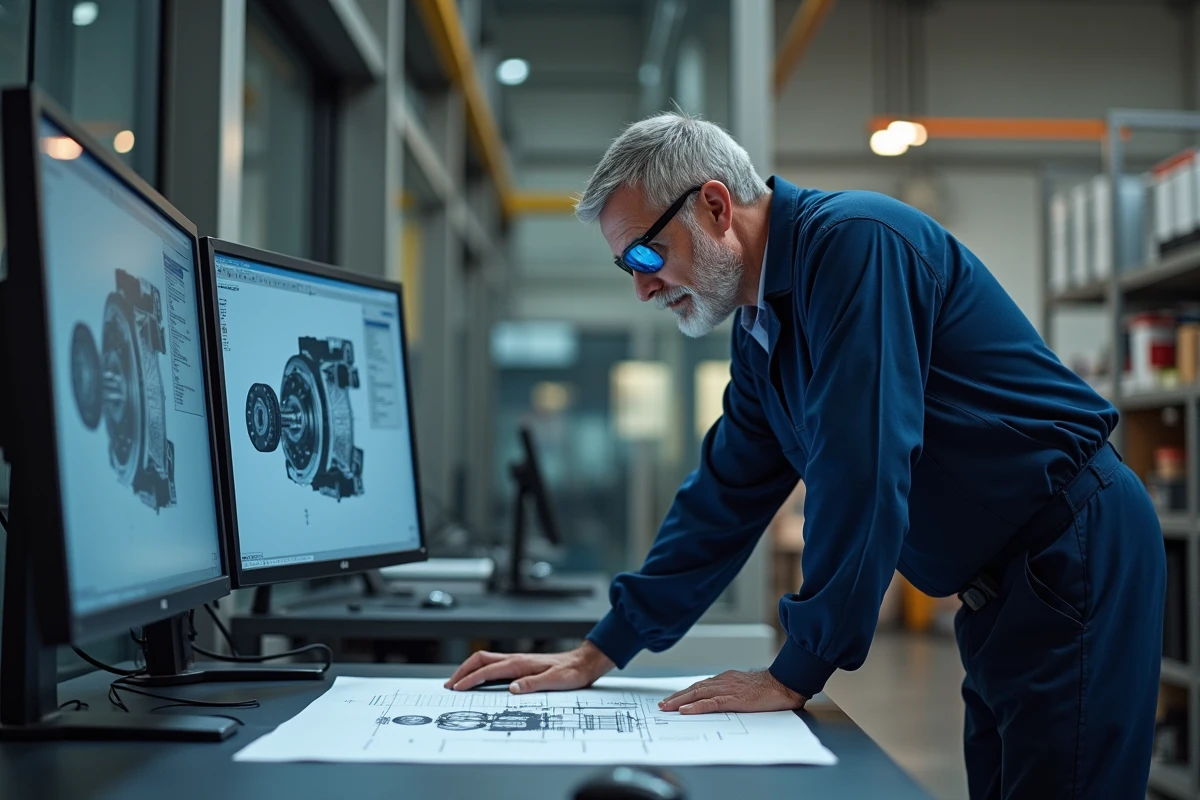
The design of industrial machines involves skills that go far beyond the mechanical design office. With the new European regulation on machines, the rise of industrial cybersecurity, and the increasing requirements for maintainability, automated equipment projects are becoming more complex at every stage. Understanding where the friction points are allows for better technical choices to be made even before the first plan.
Cybersecurity of automated equipment: a design criterion, not a late addition
Recent European texts require considering digital interfaces, remote access, and software updates as product safety elements from the project outset. Cybersecurity thus joins mechanical and electrical requirements within the same risk analysis.
A connected controller without an access policy exposes the manufacturer to regulatory non-compliance, not just a technical risk.
For an automation project, this means integrating attack scenarios into the initial risk analysis, just like risks of entrapment or electric shock. The topic concerns both the automation engineer and the network engineer, which requires coordination rarely accounted for in traditional schedules. Some design offices have integrated this dimension for several years, while others discover it at the time of compliance, leading to significant discrepancies in certification timelines.
Anyone interested in the design of industrial machines and automated equipment will notice that this digital dimension redefines the skills needed within project teams.

Machine Regulation 2023/1230: what changes for design projects
The regulation (EU) 2023/1230 is gradually replacing the directive 2006/42/EC. Its application starts in January 2027. The main difference lies not in a tightening of mechanical requirements, but in the expansion of the scope to include safety software and digital systems.
An embedded software that ensures a safety function (emergency stop controlled by a controller, area monitoring by a sensor) now falls under the same compliance obligations as a physical component. The technical documentation must reflect this, with version traceability and validations.
For designers, the direct consequence is an increase in the technical file’s complexity. The available data does not yet allow for measuring the actual impact on time-to-market, but several industry players anticipate an extension of the validation phase. The EN ISO 12100 standard, which structures risk assessment, remains the methodological foundation. However, its application must now explicitly cover software components.
Key standards to articulate in a machine project
- EN ISO 12100 for risk assessment and reduction from the functional definition phase, including risks related to digital interfaces.
- EN ISO 13849-1 for calculating the performance levels (PL) of control systems, with increased attention on programmable parts.
- EN 60204-1 for the safety of electrical equipment: wiring, emergency stops, power circuits, and their interaction with software layers.
The difficulty does not come from each standard taken in isolation, but from their articulation within the same project. An automated system simultaneously touches on these three frameworks, and the overlapping areas generate technical trade-offs that only a multidisciplinary team can resolve.
Co-design with maintenance: an underestimated lever in industrial projects
Current field practices show a shift in the success criteria of a machine project. Raw performance (throughput, accuracy) remains a prerequisite. But maintainability and accessibility of components weigh just as heavily in customer satisfaction as productivity figures.
This observation drives designers to involve operations and maintenance teams from the project outset. The goal: to reduce unplanned downtime and simplify routine interventions. A sensor placed behind a welded structure, a cylinder accessible only after disassembling an entire cover, these design choices are costly in terms of immobilization.
Standardization of components and impact on production
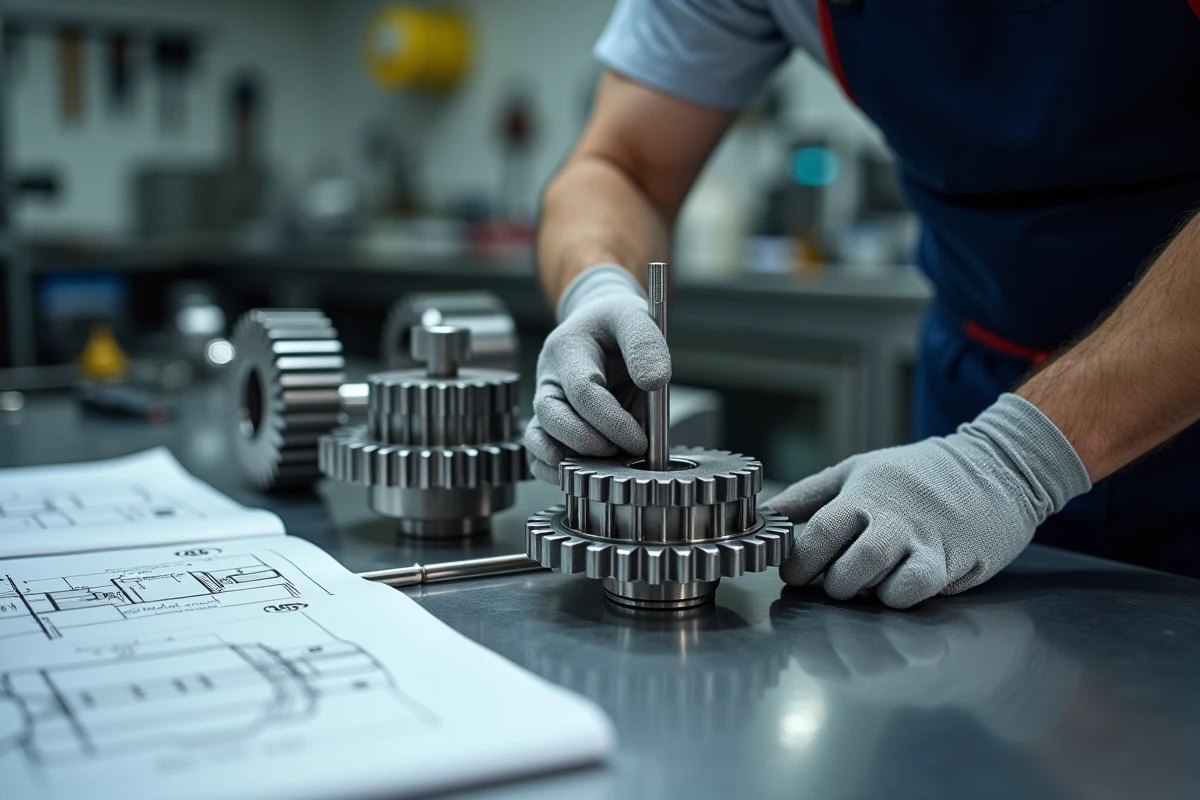
The standardization of components (motors, sensors, connectors) is another axis of co-design. Using identical references across multiple sub-assemblies reduces spare parts inventory and speeds up diagnostics. For the automation engineer, this also simplifies programming: the same functional block can be reused from one module to another.
Field feedback varies on the degree of desirable standardization. Too much standardization stifles technical optimization on specific positions. Not enough multiplies references and complicates operator training. The trade-off is made project by project, depending on production volume and the variability of the parts processed.
Skills and training: the often-neglected link in industrial automation
A well-designed but poorly operated automated equipment loses much of its value. The training of personnel, whether operators, maintenance technicians, or production engineers, determines the actual return on investment of the project.
The profile of the automation engineer is evolving. Beyond mastering programmable controllers and robotics, the expected skills now include managing industrial networks, reading production data, and understanding cybersecurity issues. This versatility remains difficult to find in the job market.
- Initial training rarely covers the entire technical spectrum required by a modern automated system (mechanics, electricity, networking, software).
- Continuing education offered by integrators often focuses on their own system, without a cross-sectional view of standards and best practices.
- The transfer of skills between the design office and operations remains a recurring weak point, reported by many commissioning feedbacks.
An automation project that does not budget for skill enhancement from the specifications accumulates risk during the startup phase and the first years of operation. The cost of non-training is measured in machine downtime, quality degradation, and turnover of technical teams.
The success of an industrial machine project is not solely determined on paper in the design office. It depends on the ability to coordinate disparate expertise, anticipate a shifting regulatory framework, and design for those who will operate the machine daily. Projects that neglect any of these three pillars pay the price after commissioning.