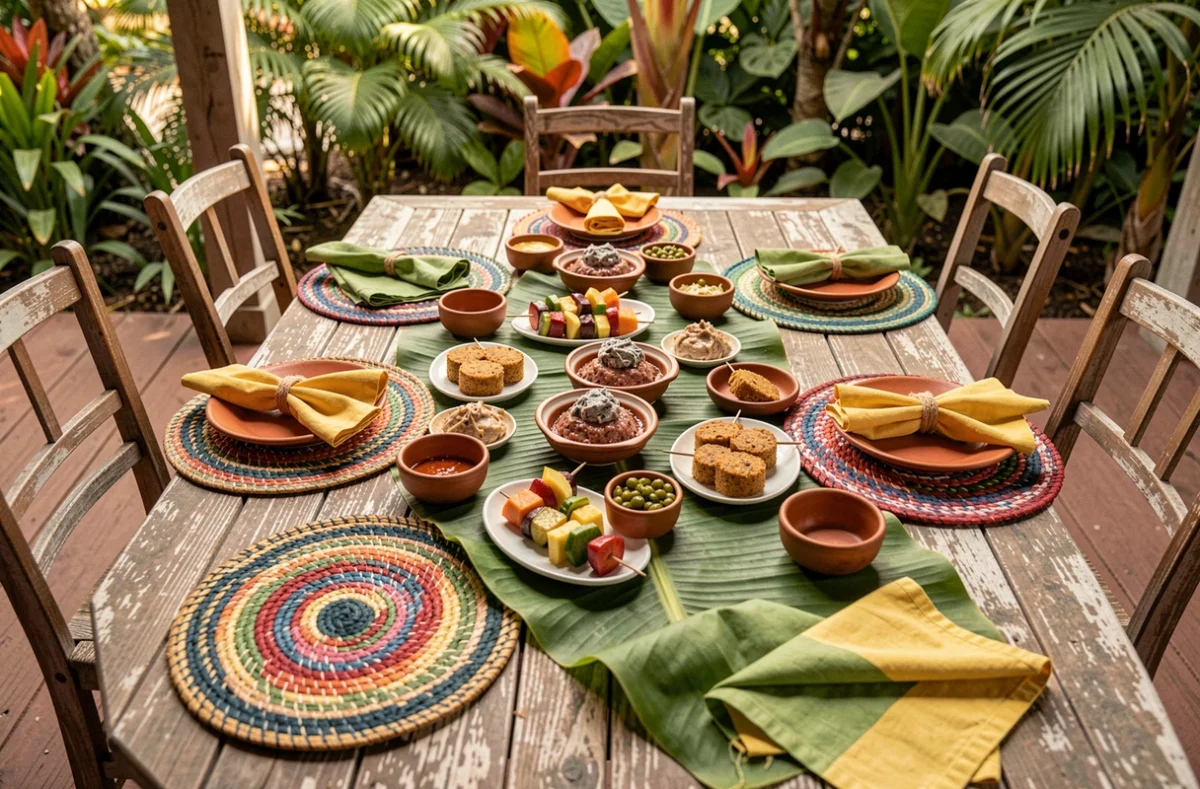
The Creole dinner aperitif is based on a balance between flavorful savory bites, drinks made with rum or exotic fruits, and logistics that cannot be improvised. Behind the apparent simplicity of an Antillean buffet, several technical constraints need to be addressed before sending out invitations: managing the cold chain, providing information on allergens, choosing spices, and portion sizing.
Allergens in Creole recipes: an often-overlooked aspect
Creole cuisine uses a range of ingredients that contain regulatory allergens that are sometimes not very visible. Sesame in certain marinades, mustard in revised chien sauces, celery in seasoning broths, or shellfish in shrimp accras: allergens hide in the most common recipes.
Even in the context of a private aperitif entrusted to a caterer, unpackaged preparations must be accompanied by clear information on allergens. A simple oral response on a case-by-case basis is not sufficient in a professional setting, according to the obligations highlighted by Le Restaurateur Futé.
Building an allergen matrix from the technical sheets of each supplier allows for the identification of these substances and for updating information when a product changes. For a homemade dinner aperitif, a printed sheet placed next to each dish does the trick. It is, in fact, by consulting the good aperitif plans on TwimmCook that one can appreciate the diversity of Creole recipes and, by extension, the variety of potential allergens to report.
Creole buffet and cold chain: separating hot dishes and cold bites
A Creole dinner aperitif systematically mixes hot bites (accras, samosas, lambi pastries) and cold preparations (fish tartare verrines, cod chiquetaille, marinated fruit skewers). This cohabitation on the same buffet poses a temperature issue.
Cold preparations made in advance require controlled temperature storage. Hot dishes must remain at a sufficient temperature to prevent bacterial growth. The decree of December 21, 2009, cited by the site Au bonheur des convives, regulates these practices for professional services.
In practice, this means planning for two distinct zones on the table:
- A refrigerated space (ice bins, coolers, eutectic plates) for verrines, dips, and cold skewers, set up in the shade if the aperitif is outdoors.
- A warm holding area (hot plates, portable heating plates, chafing dishes) for accras, fritters, and pastries, served in small batches rather than all at once.
- A rotation of dishes every forty-five minutes or so to replace items that have been exposed to room temperature for too long, especially in summer.
Never place all dishes on the table simultaneously remains the simplest and most effective rule. It is better to plan a gradual setup that creates movement and protects food safety.
Creole recipes for dinner aperitif: choose depth over quantity
The temptation is to multiply recipes to impress. Feedback from the field varies on this point: a buffet of fifteen different bites dilutes attention and complicates preparation, while five or six well-executed recipes leave a stronger impression.
Savory bites to prioritize
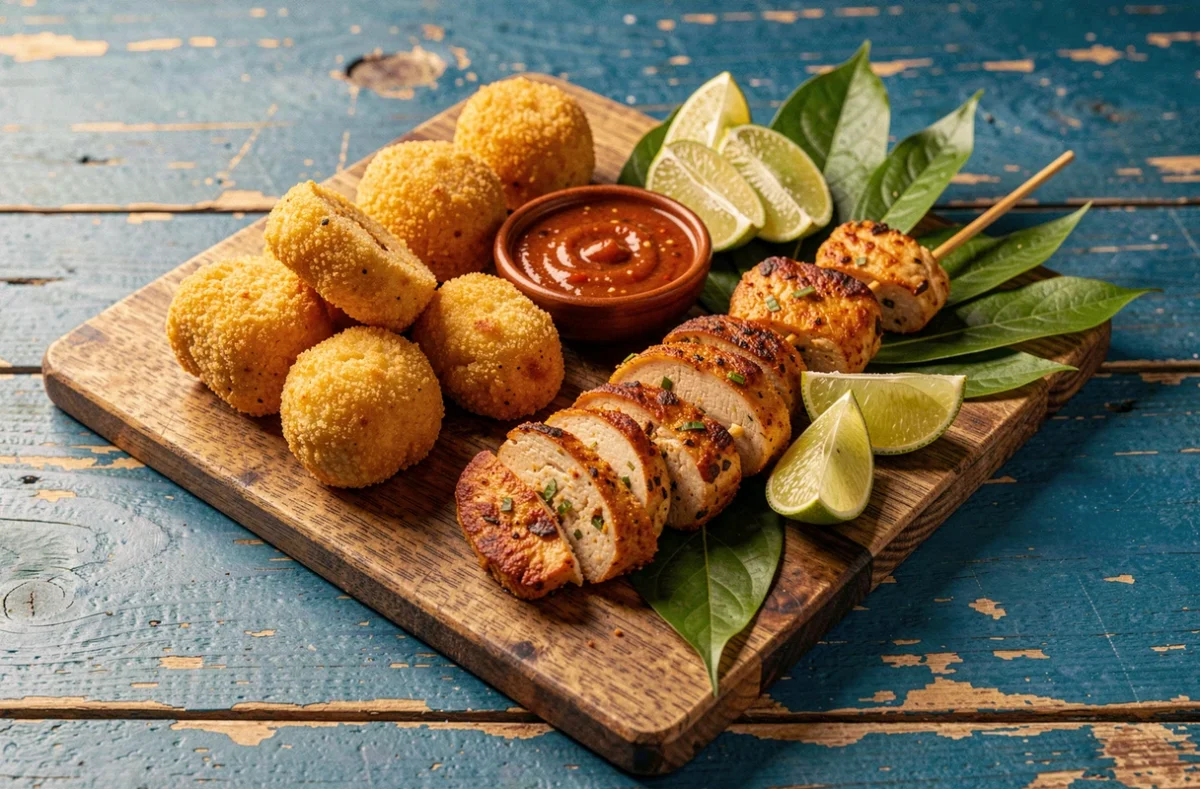
Cod accras remain the cornerstone of any Creole aperitif. Their crispy exterior and soft interior make them a safe bet. The spicy bonbon piment adds contrast. Cheese and Creole spice pastries (colombo, bois d’Inde) offer a less technical option that can be prepared in large quantities.
Three well-executed savory preparations are worth more than eight hastily made bites. The quality of frying, the spice level, and the freshness of the fish make all the difference.
Sauces and accompaniments
A chien sauce made with local onions, lime, parsley, and fresh vegetarian chili pairs well with both accras and chicken skewers. A green tomato rougail or mango chutney adds tangy notes that balance the richness of fried foods.
The chien sauce should be prepared at the last moment to maintain the brightness of the lime and the crunchiness of the herbs. Made too far in advance, it loses its freshness and oxidizes.
Waste reduction and Creole menu design
Waste reduction is not just about using leftovers after the party. It should be considered from the menu design stage. The quantities for a Creole dinner aperitif must be calibrated according to the number of guests, the dinner character (which replaces a meal), or purely aperitif.
For a dinner format, plan for a quantity per person that is significantly higher than for a simple aperitif: guests will not be dining afterward. Underestimating the portions for a dinner is the most common mistake.
Several Creole ingredients lend themselves to a culinary reuse logic:
- The fish used for accras can come from filleting trimmings (cod loins, cod tails), which reduces cost and waste.
- Overripe fruits (mangoes, pineapples, passion fruits) can be used as a base for chutneys, marinades, or arranged punches instead of ending up in the trash.
- Surplus herbs (chives, flat-leaf parsley, thyme) can be frozen in oil in portions, ready for the next preparation.
Creole drinks for a dinner aperitif: beyond the ti-punch
The ti-punch (agricultural rum, lime, cane sugar) and the planteur (rum, exotic fruit juice, sugar syrup, spices) are the classic foundation. Offering only these two options limits conviviality for guests who do not consume alcohol or who prefer less sweet flavors.
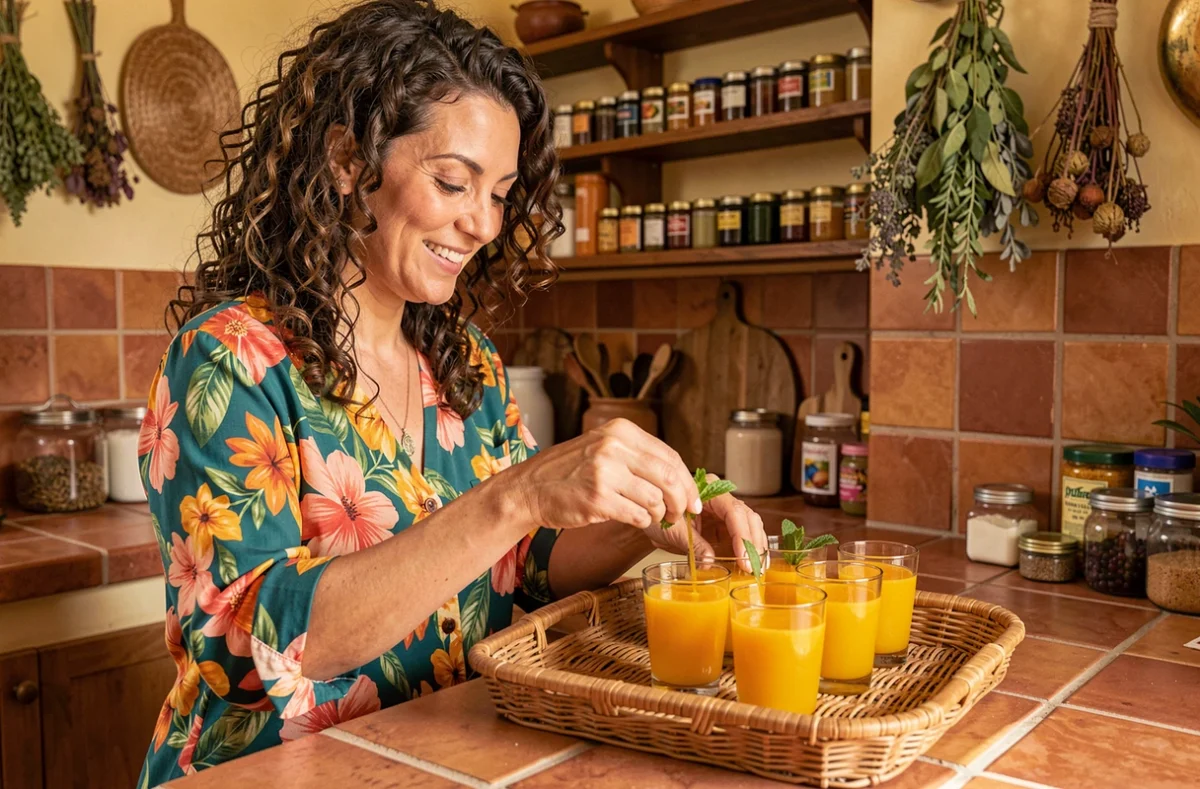
Fresh juices from guava, maracudja, or pineapple, served very cold with a hint of lime, provide a credible alternative. A tamarind syrup mixed with sparkling water creates a refreshing and original drink.
Providing at least two non-alcoholic options avoids the “punch or nothing” effect that excludes some guests. The punch’s dosage also deserves special attention: an overly generous rum measure at the aperitif can shorten the evening faster than expected.
The choice of rum influences the final result. A white agricultural rum brings herbal notes that pair well with the lime in the ti-punch, while a molasses rum is better suited for fruity planteurs. Confusing the two types results in unbalanced cocktails.
A successful Creole dinner aperitif relies less on the number of recipes than on rigor in three areas: temperature control, transparency about allergens, and portion calibration. The rest, the atmosphere, the music, the colors of the madras on the table, comes naturally when the technical foundation is solid.