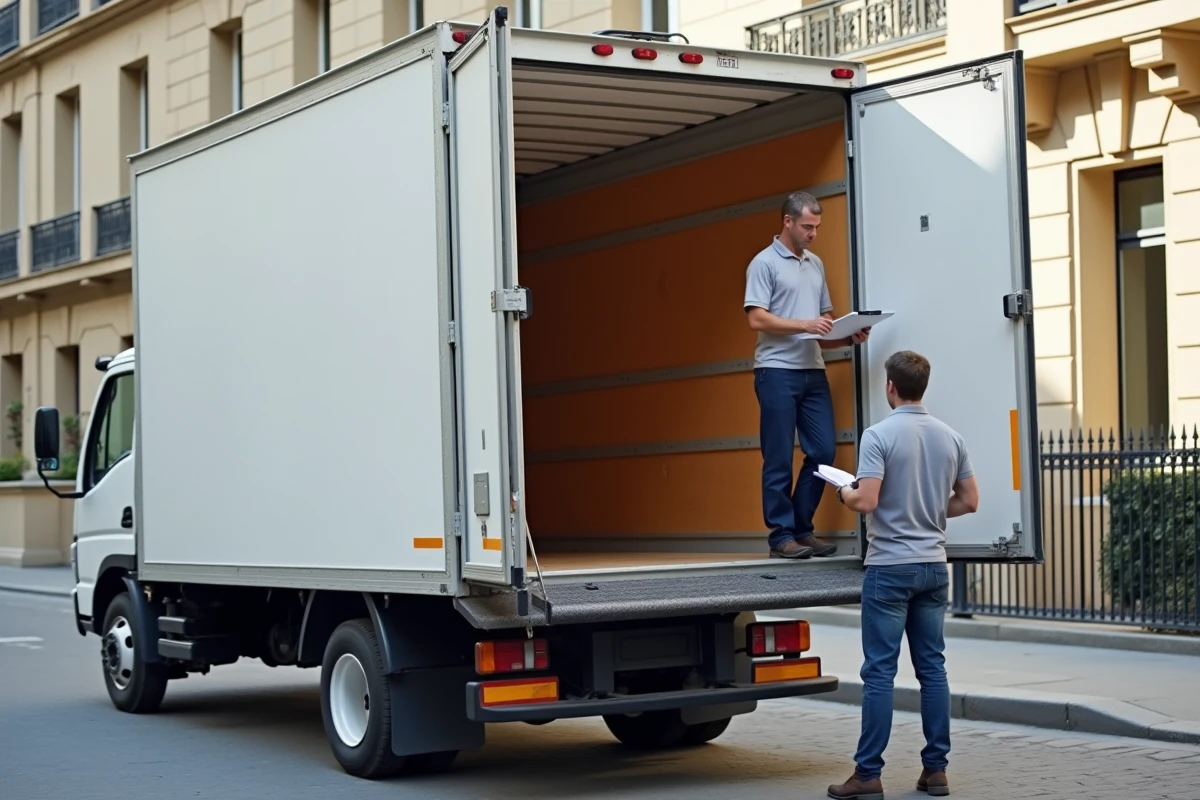
A 20m3 truck is the vehicle that most individuals encounter on moving day without really knowing what it can hold. Behind this round figure lie constraints of dimensions, weight, and driving that deserve to be understood before signing a rental contract or loading the first box.
Payload and GVW of a 20m3 truck: the weight trap
Have you ever lifted a box of books thinking “it will fit”? With a 20m3 truck, the reasoning is the same, but the consequences of a mistake are much more serious.
The available volume is generous. The payload, however, is much less so. On a standard model, the payload is around 620 kg. This means that the total weight of everything you place in the truck must not exceed this threshold, otherwise the vehicle exceeds its GVW (Gross Vehicle Weight) of 3.5 tons.
This 3.5-ton limit is crucial: below it, a Class B license is sufficient. Above it, a Class C license and additional training such as FIMO are required. In other words, if you load a 20m3 truck beyond its payload, you are potentially driving without the correct license, which constitutes a serious offense.
In practice, filling 20 cubic meters with light furniture (clothes, linens, small boxes) will not pose a weight problem. However, a mixed load with appliances, bookshelves, and dishes quickly reaches the limit. To delve deeper into the technical specifics of this type of vehicle, you can learn more on Je veux de l’info which details these aspects.

Interior dimensions of the 20m3 truck: what fits and what doesn’t
The interior dimensions of a 20m3 truck follow a relatively uniform standard from one rental company to another: about 2.30 meters in height, 2.08 meters in width, and 4.21 meters in length for the main cargo area.
The over-cab compartment, a bonus volume often overlooked
Above the driver’s cabin, most of these trucks have a compartment over the cab of about 1.5 m3 extra. This is the ideal place for light and fragile items: comforters, pillows, clothing bags. Sliding a heavy box up there complicates unloading and destabilizes the vehicle.
Getting through doors and underground parking
The external dimensions of the truck are significantly larger than its internal cargo area. The total height often exceeds 3 meters. Most underground parking facilities limit access to 1.90 m or 2 m. A 20m3 truck will not fit in any standard underground parking.
Before the big day, also check the width of the streets in your neighborhood and the presence of low branches or overhangs. In densely populated urban areas, these obstacles are common.
20m3 truck and low emission zones: a recent constraint
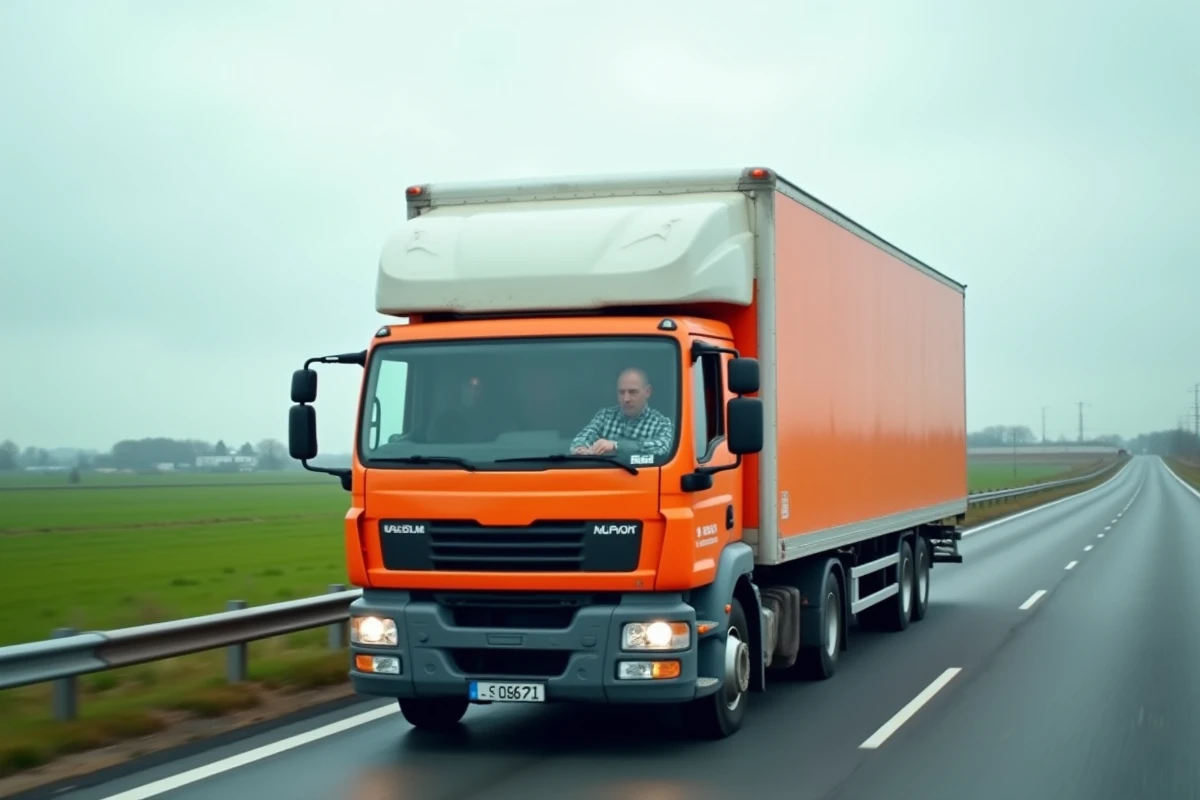
The majority of 20m3 trucks available for rent run on diesel and carry a Crit’Air sticker of 2 or 3. This detail can become a real problem if your move takes place in a large metropolis.
The Greater Paris Metropolis, for example, has voted for the gradual ban of Crit’Air 3 vehicles in its ZFE perimeter starting in 2025, with a subsequent tightening announced for Crit’Air 2. These restrictions also apply to rental vans, and rental companies rarely mention this on their booking pages.
Some networks are beginning to incorporate 100% electric large volume trucks, such as the Renault Trucks E-Tech, for short-term rentals in urban areas. The offer remains concentrated in a few major cities, with mileage limits and mandatory overnight charging. For long-distance moves, diesel remains the only realistic option to date.
- Check the Crit’Air sticker of the vehicle offered before booking, especially for an intra-urban trip in Paris, Lyon, or Marseille.
- Ask the rental company if Crit’Air 1 or electric models are available at the nearest agency.
- Consult the official ZFE map on the government website to know the current restrictions on your route.
Loading a 20m3 truck properly: method and common mistakes
Having 20 cubic meters does not guarantee that everything will fit. The way you organize the loading radically changes the actual capacity of the vehicle.
The heaviest items should be placed at the back, against the cabin wall, and as low as possible. Appliances (washing machine, refrigerator), boxes of books, and crates of dishes form the base. This distribution lowers the center of gravity of the truck and improves road handling.
Then stack medium-sized boxes in tight columns up to the ceiling. Fill empty spaces with cushions, blankets, or soft bags. Every gap wastes volume and allows items to shift during transport.
Dismantled furniture (bed base, shelves, table tops) should be secured vertically along the side walls. They serve as bracing to stabilize the rest of the load.
The tail lift: an underestimated asset
Most 20m3 trucks for rent come with a tail lift at the back. Its use seems intuitive, but two precautions are necessary:
- Never exceed the maximum load indicated on the lift itself (often around a few hundred kilos). A washing machine alone fits, but a washing machine plus a refrigerator at the same time probably does not.
- Keep your feet inside the lift during ascent or descent, never on the edge.
- Always secure the truck with the handbrake and wheel chocks before using the lift, especially on sloped ground.
A move with a well-prepared 20m3 truck can be completed in a single round trip for a typical F4 or F5 accommodation. The key is to respect the payload, anticipate the vehicle’s dimensions on your route, and check the ZFE restrictions if you are passing through a large urban area. The volume is there; it is the weight and regulations that set the real limits.